

Top 7 Healthcare Software Development Challenges & Solutions in 2026

Healthcare is no longer just about treatment; it’s about data, speed, and precision. As digital transformation accelerates, healthcare software development has become a mission-critical function rather than just an IT initiative.
From AI-powered diagnostics to electronic health records (EHRs), strong digital infrastructure is now essential, making healthcare software development a strategic priority rather than just a support function.
Organizations like the World Health Organization (WHO) now emphasize digital health as a core pillar of resilient healthcare systems.
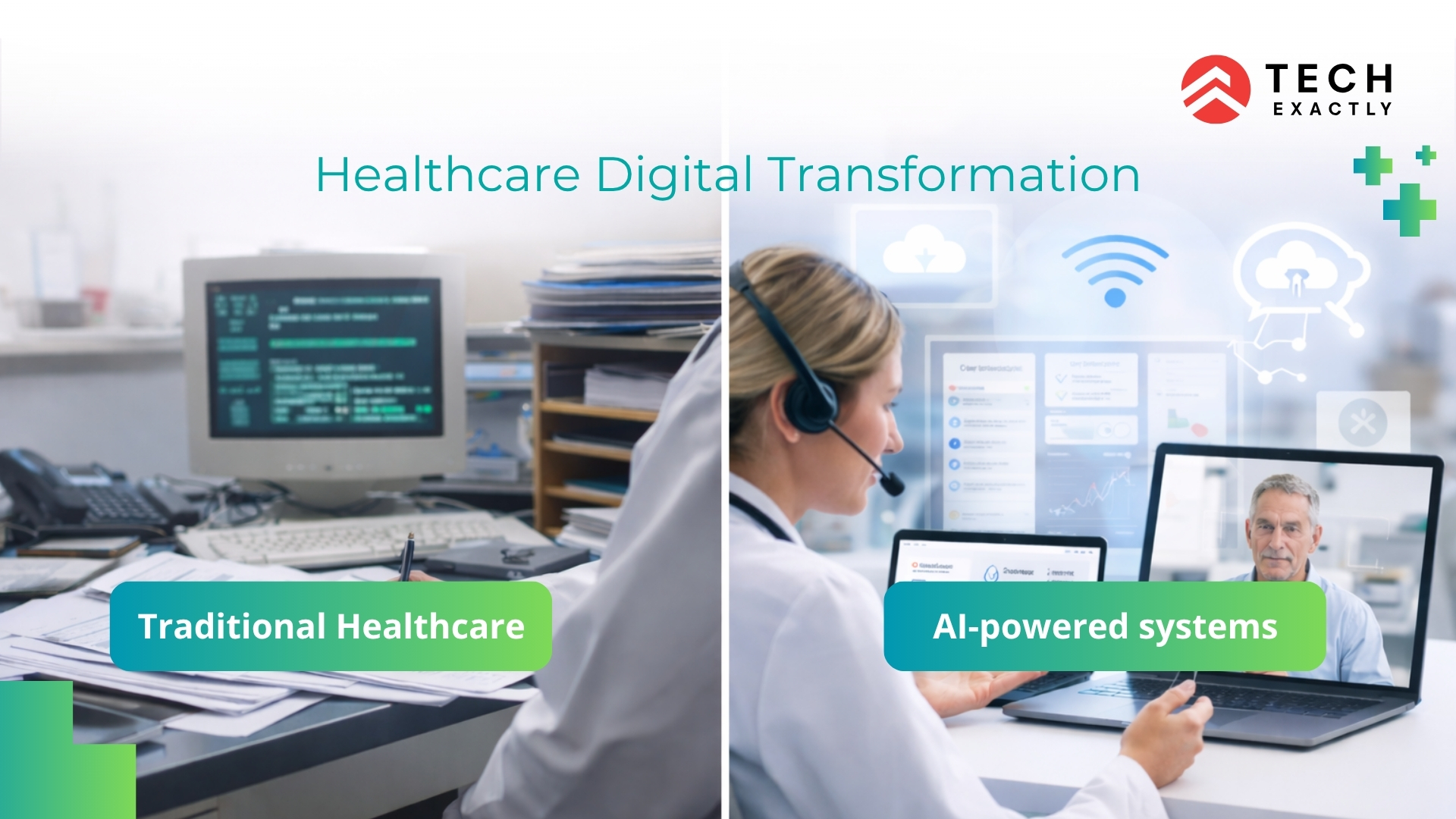
A clear example of this transformation can be seen during the COVID-19 pandemic, when healthcare systems worldwide rapidly adopted telemedicine, digital health records, and AI-driven diagnostics.
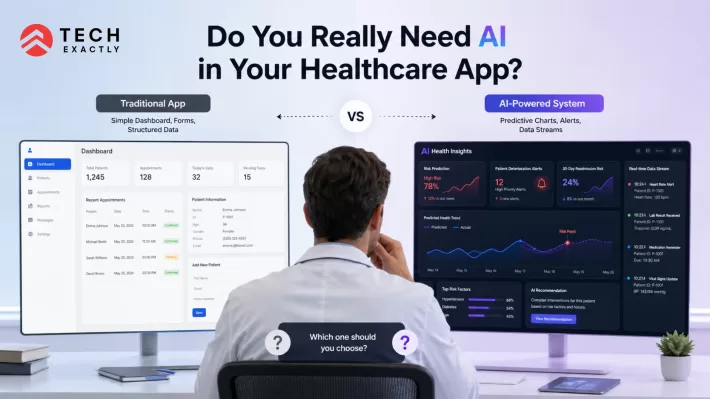
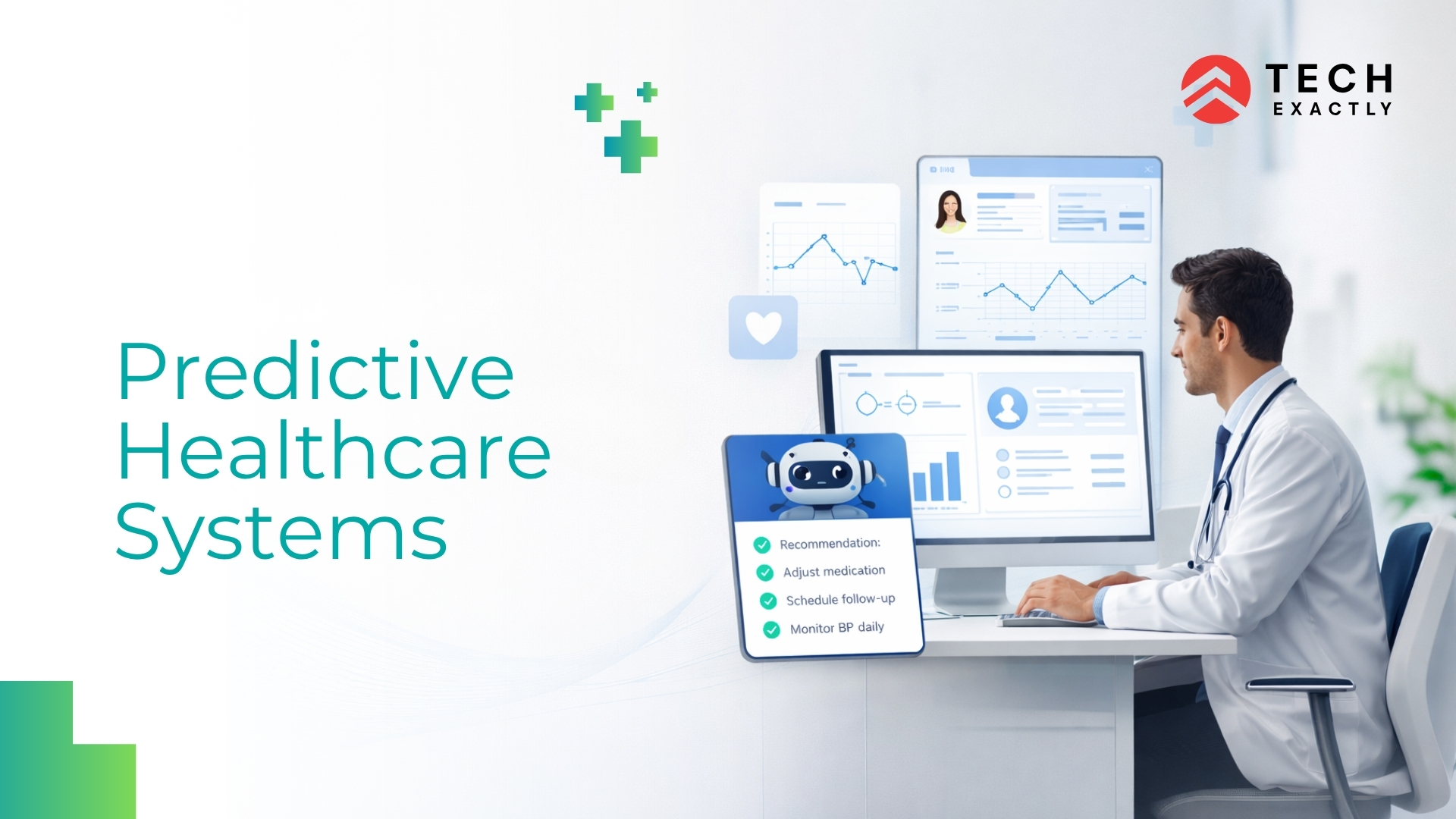
Advanced solutions like AI-powered healthcare applications are now enabling predictive analytics and early disease detection.
Hospitals that had already invested in strong digital infrastructure were able to respond faster, manage patient loads more efficiently, and deliver remote care at scale, highlighting how critical healthcare software has become.
Healthcare CTOs have a clear challenge: to build systems that are scalable, secure, and compliant while also getting measurable results and dealing with growing complexity.
The complexity of healthcare settings poses particular operational and technical challenges, even as innovation accelerates. This blog examines the top seven obstacles in healthcare software development, along with, more importantly, effective solutions.
From what we have observed at Tech Exactly, working with healthcare organizations, the biggest problems are more than just the use of new technology. They often come down to:
Adding new solutions to complicated, high-stakes healthcare settings without getting in the way of care delivery
Fixing problems with interoperability between old systems and new apps
Making sure that compliance is built into the system from the start, not added later
Making software that works with real clinical workflows and meets usability needs
This is why making healthcare software that works well requires more than just technical skills; it also requires a deep understanding of healthcare workflows, rules, and how to make it work on a large scale.
How is Software Development a Need of the Hour in Healthcare?
Healthcare is at a turning point. Rising costs, higher patient expectations, and the need for real-time insights are pushing organizations toward digital-first models. Software now plays a critical role in diagnosis, treatment planning, remote monitoring, and patient engagement.
Predictive analytics, early disease identification, and individualised treatment options are made possible by sophisticated AI software development solutions. In order to stay competitive, healthcare companies must engage in custom mobile app development due to the growth of telemedicine and mobile health platforms.
To stay competitive, healthcare companies must invest in reliable healthcare app development services that support scalable and compliant systems. For CTOs, this involves creating systems that are not only creative but also safe, compatible, and adhere to changing legal requirements.
Top Healthcare Software Development Challenges and How to Solve Them
Data Security and Privacy (HIPAA/GDPR)
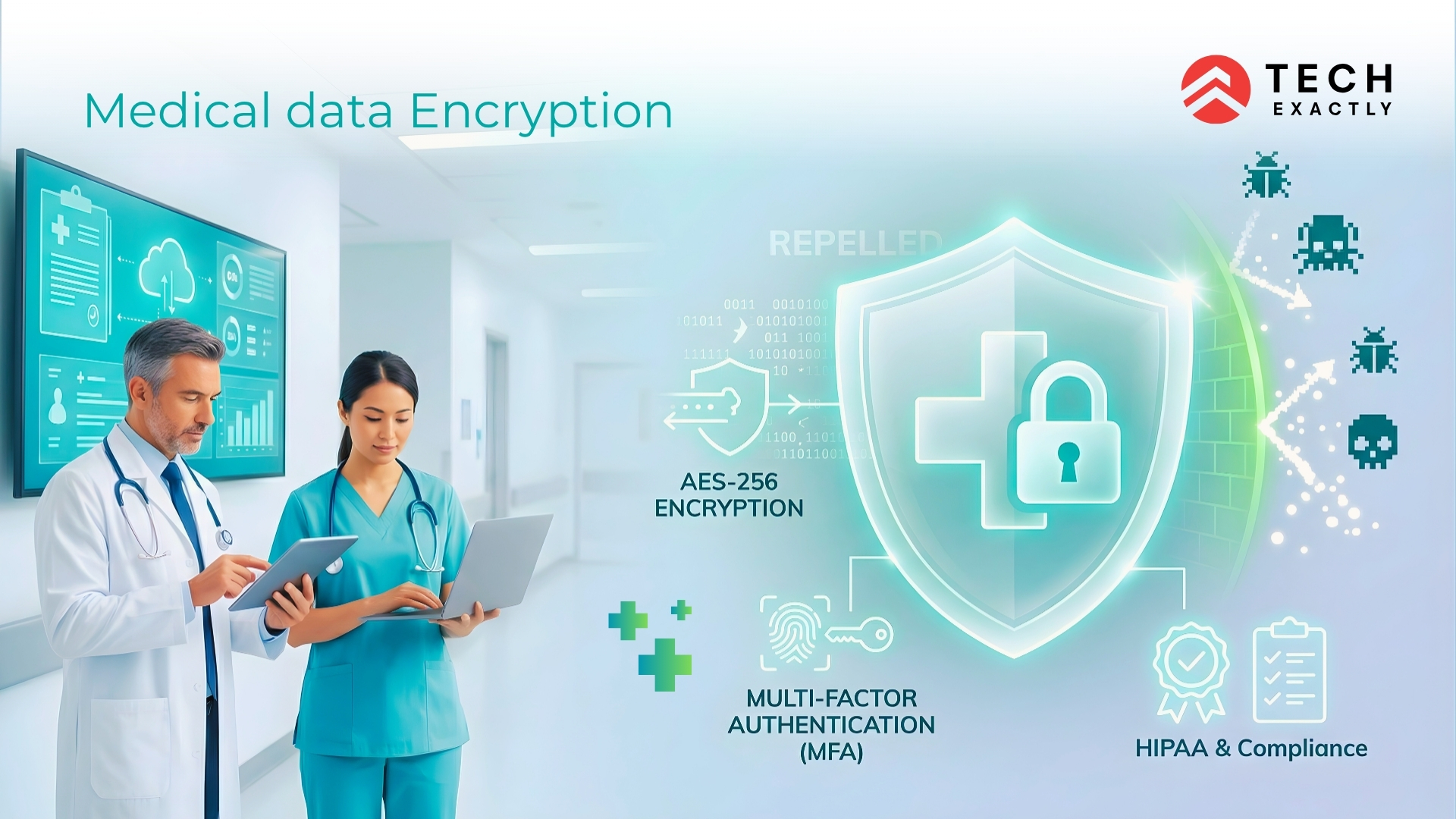
Data security remains one of the biggest concerns in healthcare software development, especially when leveraging advanced AI software development solutions that process sensitive patient data.
Platforms built using secure telemedicine app development services ensure compliance with HIPAA while enabling safe remote care delivery.
Another level of complexity is added when managing patient records across many platforms in order to ensure compliance with laws like GDPR and HIPAA. Use strong encryption standards like AES-256 to protect data at rest and in transit.
Add multi-factor authentication (MFA) to prevent unauthorized access. Run regular security audits and penetration tests to identify vulnerabilities. In addition to compliance, a proactive, security-first architecture is essential for preserving patient confidence and protecting the reputation of the institution.
We at Tech Exactly have seen that security is often seen as a compliance checklist instead of a core architectural layer in many healthcare projects. One time, a client came to us after failing a compliance audit because their access control systems weren’t strong enough.
Our team rebuilt the platform with security in mind, starting from scratch with role-based access, encryption standards, and audit logging. This not only made sure that the rules were followed, but it also made end users trust the system more.
This IBM data breach report mentions that healthcare has the highest data breach cost.
For instance, the National Health Service faced a major disruption during the WannaCry ransomware attack, where outdated systems and weak security practices led to canceled appointments and compromised services. This incident underscores why proactive security architecture is essential.
Interoperability and Legacy Systems
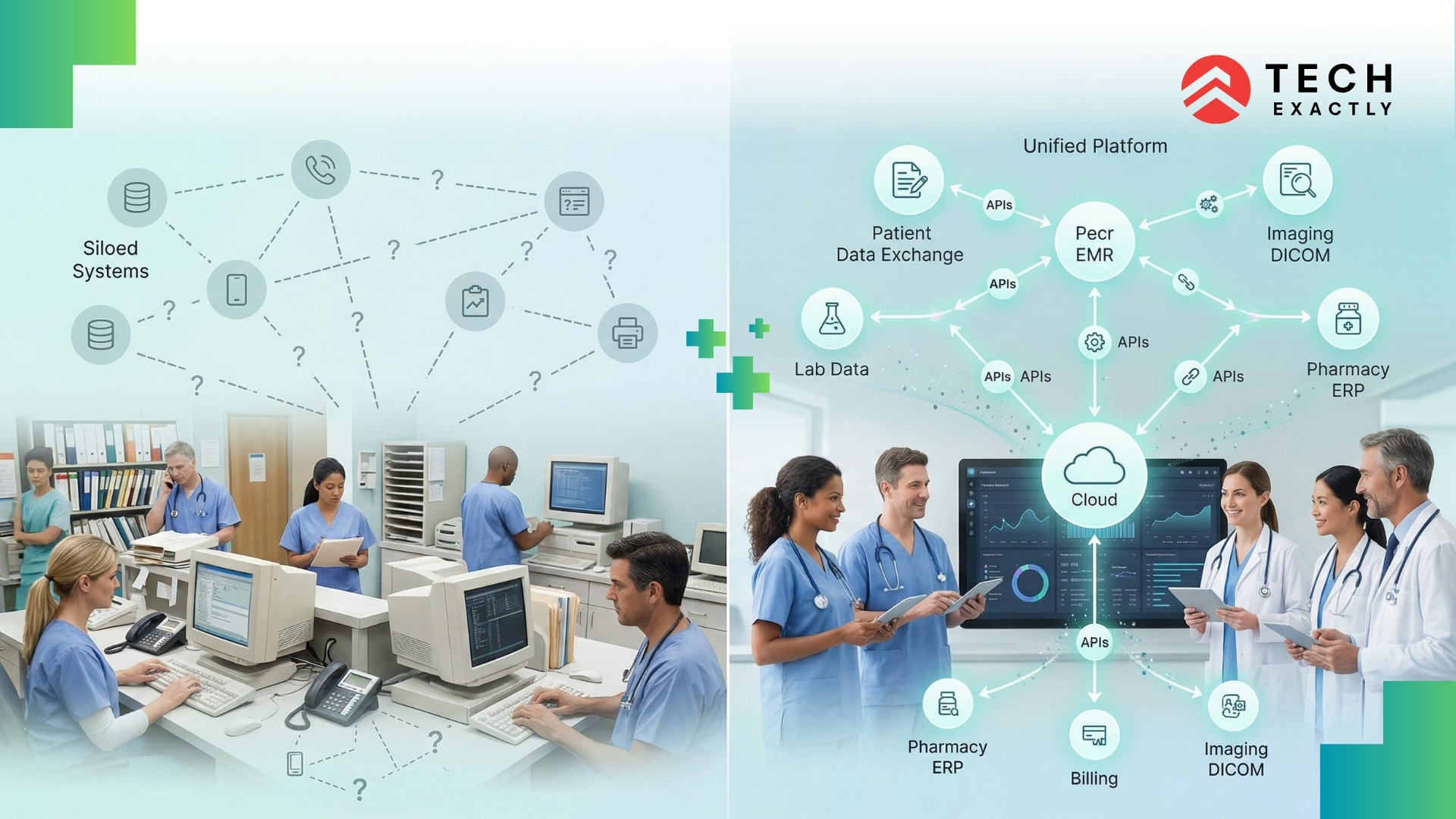
Poor system-to-system communication remains a major challenge. Many healthcare companies continue to use outdated infrastructure, which makes it difficult to interact with contemporary apps.
Adopting standardised protocols that facilitate structured data interchange across systems, such as HL7 and FHIR (Fast Healthcare Interoperability Resources), is the answer.
Use APIs and integration layers to connect legacy systems with modern platforms. This strategy guarantees continuity of service and operational effectiveness by enabling CTOs to modernise gradually while protecting current investments.
Modern systems rely on standards like FHIR and cloud-based architectures, as explained in this guide on technologies in healthcare app development.
Regulatory Compliance
Healthcare software must comply with complex and evolving regulations. There may be legal repercussions, business interruptions, and reputational harm if these criteria are not met.
Involve compliance experts early in the development process. Regulatory requirements are incorporated into the architecture rather than being added as an afterthought when a compliance-by-design approach is used.
Plenty of teams try to “add compliance later,” which usually means more work and delays. In our experience, including compliance in the development lifecycle from the start makes things go more smoothly. For one of our healthcare collaborations, getting compliance experts involved early on helped speed up approvals and avoid expensive redesigns.
This entails putting in place role-based access controls, keeping thorough audit trails, and guaranteeing data traceability across systems. In addition to lowering risk, an organised compliance approach speeds up deployments and approvals.
Poor Usage, Adoption / UX Design
If software is hard to use, clinicians won’t adopt it. A high emphasis on user experience is necessary to increase adoption. Map real workflows and design simple, intuitive interfaces.
Feedback loops and iterative testing are crucial for ongoing product improvement. Organisations may increase adoption rates, shorten training times, and ultimately enhance patient outcomes by putting usability first.
Complex Data Management
From imaging files and real-time monitoring data to patient records, healthcare systems produce enormous amounts of both organized and unstructured data. Managing this data efficiently is a major challenge.
Using distributed databases and cloud-based storage options that can manage big datasets with high availability is a scalable strategy. Use cloud storage, data lakes, and real-time pipelines to process data at scale.
This increases operational effectiveness while also revealing insightful information that might improve patient care and clinical decision-making. Managing large volumes of structured and unstructured data is a growing challenge, particularly for platforms powered by AI software development solutions.
Organizations like Mayo Clinic leverage large-scale data platforms to process vast amounts of clinical and research data, enabling advanced analytics and personalized treatment strategies.
Budget and Time Management
Healthcare projects often run on tight budgets and deadlines, which makes it challenging to provide top-notch solutions without sacrificing quality. Conventional development methods may result in delays and overspending.
Use agile methods to prioritize high-impact features and deliver faster. Better resource allocation, quicker feedback cycles, and shorter time-to-market are all made possible by this iterative strategy.
For CTOs, this entails striking a balance between creativity and pragmatism, concentrating on solutions that yield immediate benefits while preserving long-term scalability.
Fragmented IT Ecosystems
Healthcare systems often rely on multiple disconnected platforms. Data flow, efficiency, and operational complexity can all be hampered by this fragmentation.
Build interoperable platforms that connect systems into one ecosystem. Improved visibility across operations, centralised management, and smooth data flow are all made possible by these systems.
Emerging approaches like agentic AI in healthcare are helping unify fragmented systems through intelligent automation. Organisations can improve patient experiences, increase collaboration, and streamline workflows by building a unified digital infrastructure.
Read more: on Agentic AI in Healthcare
Other Key Considerations
Staffing Shortages
Building and maintaining complicated systems is difficult since there is frequently a shortage of qualified healthcare IT workers. By giving access to specialised knowledge and scalable teams, collaborating with a reputable healthcare app development company in the UK or the USA can help close this gap.
Projects can be completed effectively without sacrificing quality or compliance by outsourcing or working with subject matter experts.
Performance Reliability
System outages in the healthcare industry can have a direct effect on patient care, making them more than just an annoyance. Thus, it is essential to guarantee high availability and performance dependability.
Strong infrastructure architecture is needed for this, including failover techniques, load balancing, and real-time monitoring. System resilience and uptime can be greatly increased by utilising cloud-native architectures and contemporary DevOps techniques.
Reliable systems guarantee the continuous provision of vital healthcare services and foster user trust. Cloud providers such as Amazon Web Services support healthcare systems with high-availability infrastructure, ensuring minimal downtime for mission-critical applications.
Final Thoughts
Success in healthcare software depends on balancing technology, usability, and compliance. Both the potential and the challenges are substantial.
Healthcare CTOs can create systems that are both functional and revolutionary by strategically addressing critical challenges, including security, interoperability, compliance, and user adoption.
This process may be sped up by selecting the best technology partners and utilising cutting-edge healthcare mobile app development services, which will allow businesses to provide creative, patient-focused solutions on a large scale.
Now is the moment to act if you want to overcome these obstacles and create healthcare solutions that are ready for the future, feel free to write to us at [email protected]