Smart Fitness Workout App That Acts Like Your Personal Trainer
Project Brief
The fitness app market is saturated and fundamentally broken. Most apps fall into one of two categories:
- Basic Loggers: Digital notebooks that tracked sets and reps but offered no intelligence, no guidance, and no real sense of progress.
- Rigid Program-Followers: Cookie-cutter workout plans with zero flexibility. Miss a day or skip an exercise? The app couldn't adapt.
Our client, a fitness entrepreneur from Australia, identified a market gap: a smart workout tracker app that could think like a personal trainer, integrated with an algorithm-based progression display viewer.
As we analyzed the brief, we realized the core problem: How to build one app that adapts equally well to a 20-year-old bodybuilder tracking 12 sets of back work and a 50-year-old beginner doing their first bodyweight squats?
That became our north star. To build an intelligent training partner that scales to any user, any goal, any experience level.
Project Type: Fitness tracking and planning mobile application
Location: Australia
Engagement Period: 6+ months
Engagement Model: Dedicated team with mobile developers (Kotlin + Swift), ASP.NET developers, UI/UX designers, QA, and a project manager.
Services Offered
Android & iOS App Development
Web Admin Panel
Personalised Training Engine
UI/UX Design
Graph & Analytics Visualisation
Subscription Flow Integration
Technologies Used
Kotlin (Android)
Swift (iOS)
ASP.Net (API + Web Panel)
Microsoft SQL Server
HTML/CSS
AWS Cloud
Third-party Integrations
Adapty
AWS Sagemaker
Google Places API
Meta SDK
PDF Generator (for workout exports)
Customer Service Ticket System
Image Uploads & Comparisons


The Discovery Process: Understanding What "Smart" Really Means
Before writing a single line of code, we spent weeks mapping user journeys. We identified three critical user personas:
The Advanced Lifter
Tracks multiple sessions daily, uses complex training formats (supersets, dropsets, pyramid sets), needs granular data on every lift, and wants the freedom to customize everything.
Pain Point: Most apps couldn't handle the complexity. Logging a superset meant hacking together workarounds or using pen and paper.
The Beginner
Overwhelmed by gym culture, doesn't know where to start, needs clear guidance on what to do next, and requires motivation to stay consistent.
Pain Point: Pain Point: Generic workout plans felt intimidating. Without personalization, users quit within weeks.
The Intermediate "Plateauer"
Has been working out for months but sees no progress, isn't sure if they're getting stronger, and lacks structured progression or visual feedback.
Pain Point: Static graphs and manual tracking made it impossible to spot trends or understand what was working.
The client expressed strong confidence in our team’s ability:
"The thing I like the most about Tech Exactly's services is their ability to take information and create something that originally was only in my head. They've been able to develop components for the app without a blueprint; they're very skilled in that regard."
What Users Needed
(And Weren't Getting From Existing Apps)
Our discovery process revealed five critical gaps in the market that were causing users to abandon existing fitness apps:
Limited Workout Tracking
Existing apps couldn't handle multiple sessions per day or advanced formats like supersets, dropsets, and pyramid sets. Serious athletes were forced back to pen and paper.
Weak Visual Feedback
Shallow progress graphs gave users no sense of whether they were actually improving. Without dynamic visual cues, motivation tanked.
Lack of Personalization
Every user saw the same generic options regardless of fitness level, goals, or schedule. Beginners wanted guidance. Advanced lifters wanted flexibility. No app delivered both.
Uninspiring UX
Modern users expect sleek, customizable interfaces with dark mode, unit switching (kg/lb), and responsive design. Most fitness apps felt like they were built in 2015.
No Smart Planning Tools
Static, pre-built workout plans required users to determine their next steps manually. This leads to decision fatigue and inconsistent progress, especially for beginners.
How We Built a Fitness App That Actually Thinks Like a Trainer
Our goal was to create a true fitness companion that could adapt to any user. We focused on three core principles: intuitive logging, intelligent guidance, and visual progress tracking.
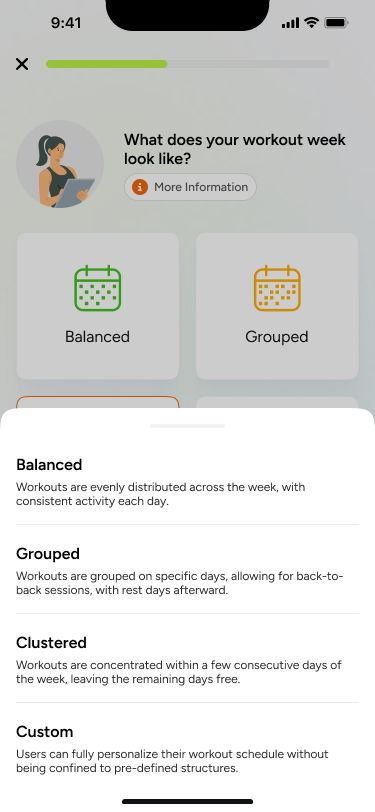
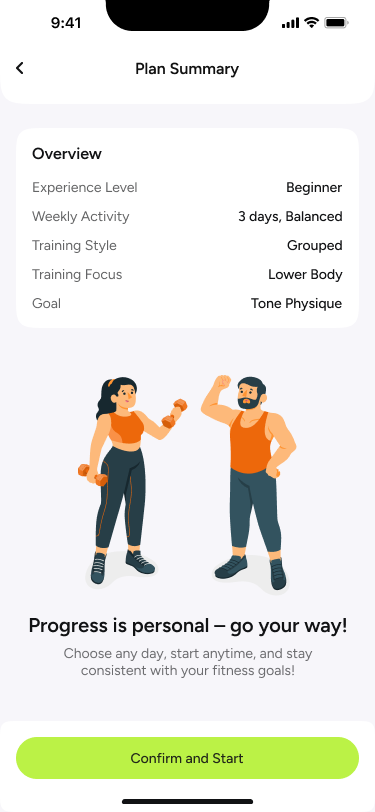
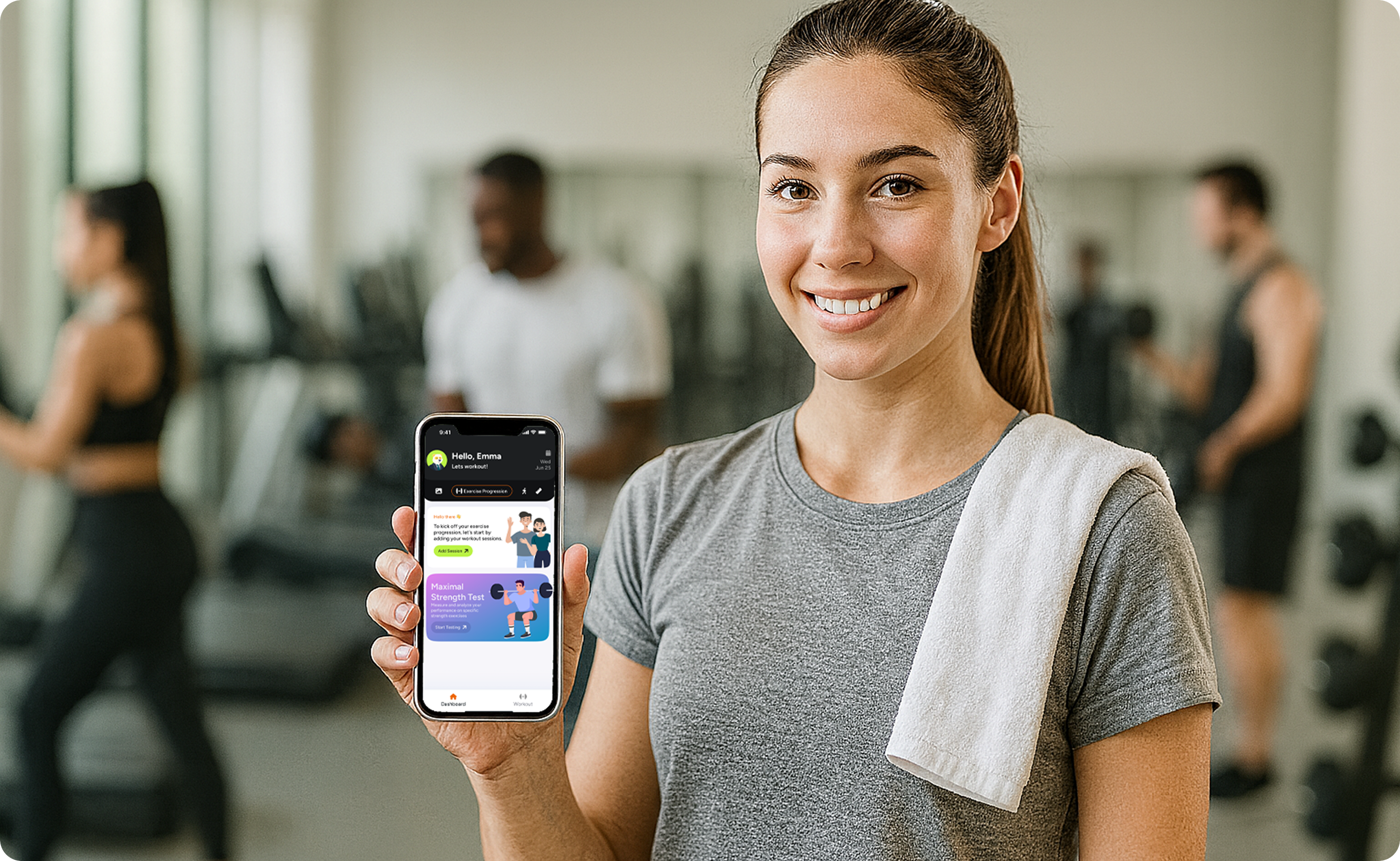
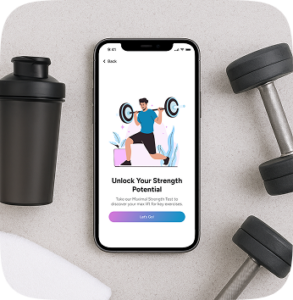
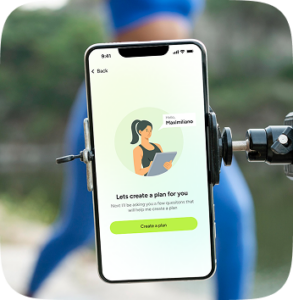
The centrepiece of the solution, MyPT, was designed as an intelligent planning engine powered by ASP.NET Core with a SQL Server database managing exercise libraries, progression rules, and individual training histories.
Unlike static plans in traditional apps, MyPT uses rule-based algorithms to generate fully adaptive 12-week plans that evolve automatically as users progress.
Existing fitness apps struggle with complex sessions like supersets or multi-phase routines. We solved this with a flexible data schema for Kotlin and Swift, enabling multi-level tracking and asynchronous handling:
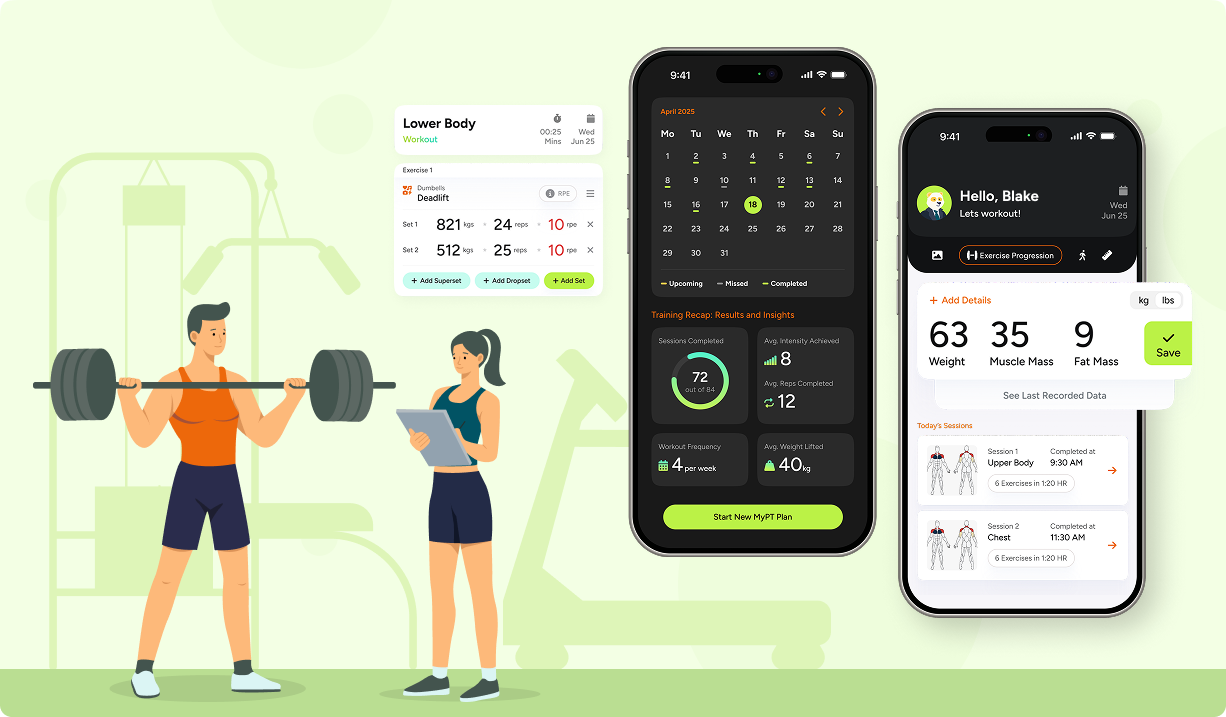
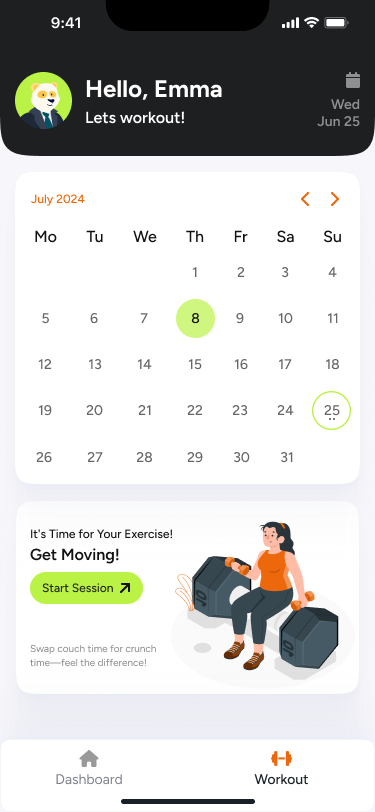
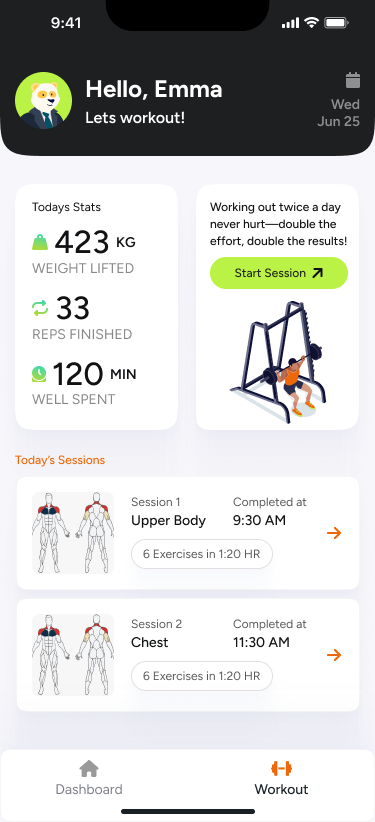
- Multiple Sessions Per Day: Record morning cardio and evening strength separately.
- Advanced Training Formats: Track supersets, dropsets, pyramid sets, and giant sets exactly as performed.
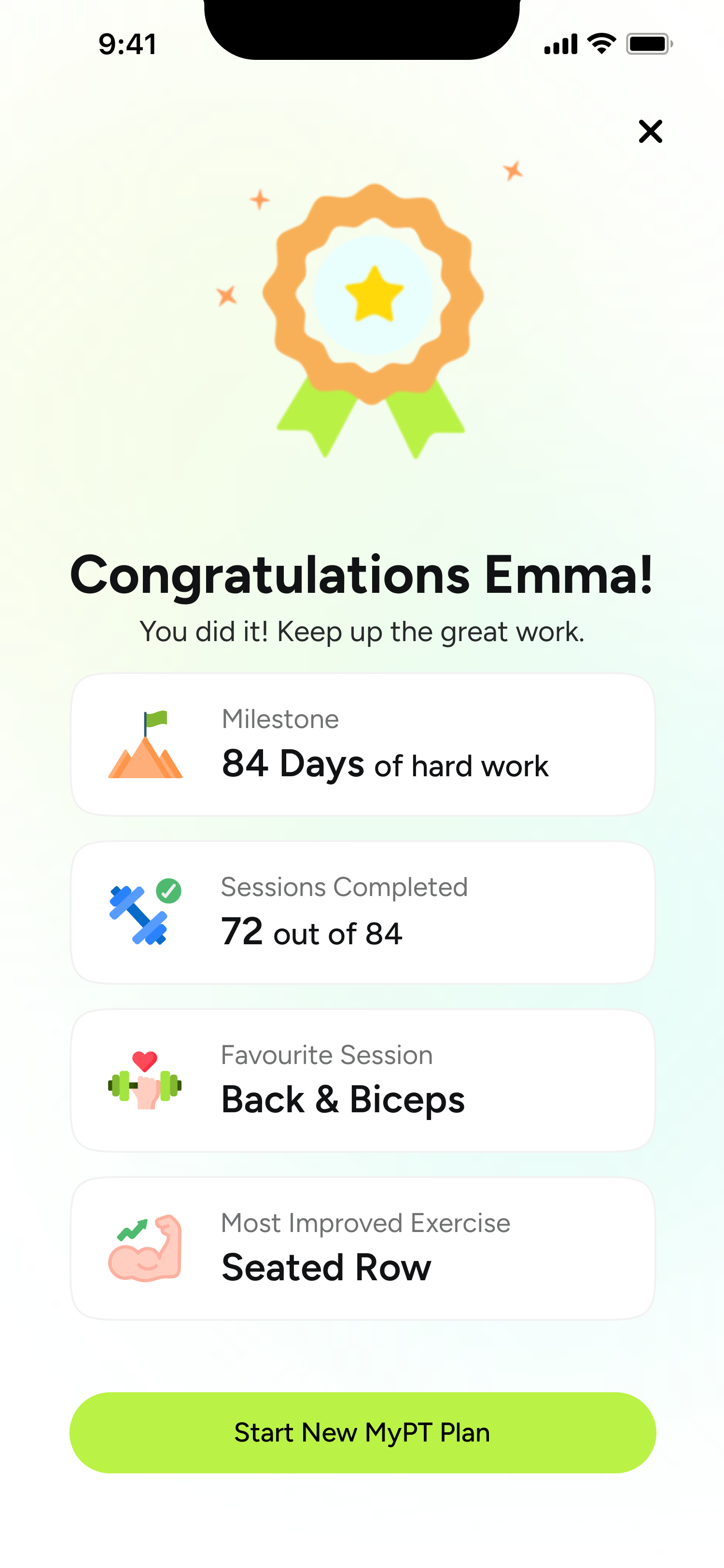
- Real-Time Performance Feedback: Compare lifts to past sessions, highlighting personal records, gains, or potential overtraining.
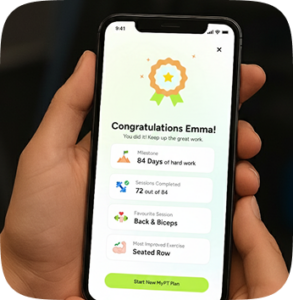
Static graphs were replaced with dynamic visualizations using a data aggregation layer optimised on SQL Server. Now, users can clearly see how their strength is developing over time with trendlines and milestone indicators that provide meaningful feedback.
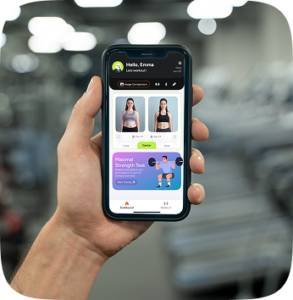
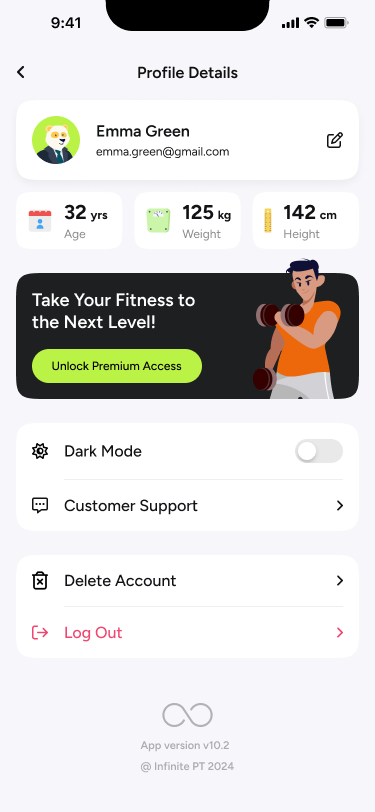
To make the experience feel more user-first, we added a dark/light mode toggle, weight unit switching (kg/lb), monthly photo uploads with comparisons, and detailed body measurement tracking. These subtle features go a long way in creating a more personal, engaging experience.
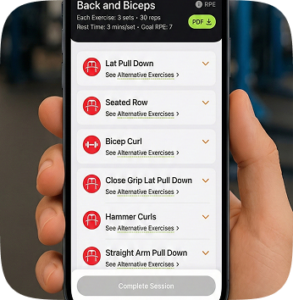
Users can export their workout plans in PDF format. Great for offline access or sharing. In-app support channels were also introduced to address queries quickly and keep users feeling supported.
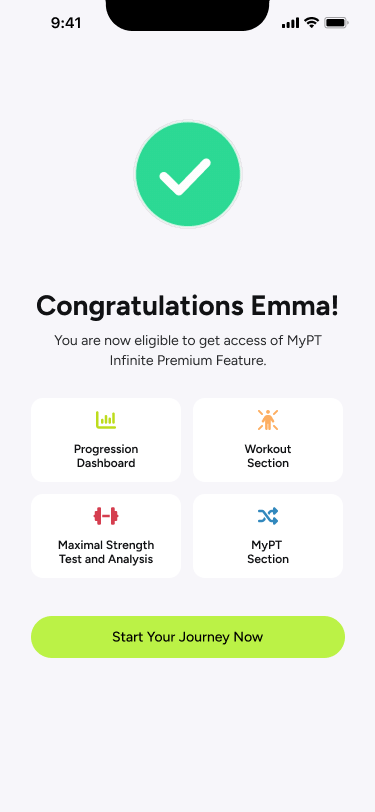
We built a React-based web admin panel connected to the core ASP.NET APIs, which enables easy content management. Admins can create and assign workout plans, manage user tiers (Free, Pro, MyPT Infinite), and respond to user issues, all without technical dependencies.

- Built MyPT — A Virtual Personal Trainer
- Workout Tracking Built for Real Training
- Visual Enhancement
- Added Personal Touches
- Export + Support
- Made Admin Easy
Advanced machine learning models and integrated AWS Sagemaker helped us to train the AI system for real time, accurate species identification. Continuous model optimization ensured high precision across various environments.
We utilized AWS Cloud to build a highly scalable infrastructure capable of handling high traffic volumes. This ensured reliability, low latency, and seamless performance for millions of global users.
To support the subscription model, we integrated Adapty for in-app purchase management and paywall setup. This allowed us to offer premium features while maintaining a smooth user experience.
Using React Native, we developed the app for both iOS and Android, ensuring a consistent experience across devices. This also optimized performance by minimizing the need for separate codebases.
We integrated Google Places API for accurate geolocation and species mapping. To address privacy concerns, we implemented secure data handling protocols and encryption to protect user information while offering personalized experiences.
Throughout the development process, we adopted an Agile methodology using the Scrum framework for efficient project management. This iterative approach allowed us to adapt quickly to user feedback and evolving requirements, ensuring the timely delivery of a high-quality product.
The centrepiece of the solution, MyPT, was designed as an intelligent planning engine powered by ASP.NET Core with a SQL Server database managing exercise libraries, progression rules, and individual training histories.
Unlike static plans in traditional apps, MyPT uses rule-based algorithms to generate fully adaptive 12-week plans that evolve automatically as users progress.
Existing fitness apps struggle with complex sessions like supersets or multi-phase routines. We solved this with a flexible data schema for Kotlin and Swift, enabling multi-level tracking and asynchronous handling:
- Multiple Sessions Per Day: Record morning cardio and evening strength separately.
- Advanced Training Formats: Track supersets, dropsets, pyramid sets, and giant sets exactly as performed.
- Real-Time Performance Feedback: Compare lifts to past sessions, highlighting personal records, gains, or potential overtraining.
Static graphs were replaced with dynamic visualizations using a data aggregation layer optimised on SQL Server. Now, users can clearly see how their strength is developing over time with trendlines and milestone indicators that provide meaningful feedback.
To make the experience feel more user-first, we added a dark/light mode toggle, weight unit switching (kg/lb), monthly photo uploads with comparisons, and detailed body measurement tracking. These subtle features go a long way in creating a more personal, engaging experience.
Users can export their workout plans in PDF format. Great for offline access or sharing. In-app support channels were also introduced to address queries quickly and keep users feeling supported.
We built a React-based web admin panel connected to the core ASP.NET APIs, which enables easy content management. Admins can create and assign workout plans, manage user tiers (Free, Pro, MyPT Infinite), and respond to user issues, all without technical dependencies.
What This Means for Users and the Business
Higher Engagement
Personalized plans + progress tracking = users actually show up and stay consistent.
Stronger Monetization
Free, Pro, and MyPT Premium tiers let users upgrade when they are ready with no hard selling.
Built for Retention
Flexibility or structure, users can follow strict plans or go freestyle. The app supports both.
Growth Ready
The backend and app architecture support future features, roles, and third-party integrations.
Conclusion
What started as a workout tracker concept is now a scalable fitness platform. By combining intelligent automation with rich UX, we build an app that is like a training partner that adapts, motivates, and grows with every user.
Reflecting on the collaboration, the client shared:
“My business itself is in its infancy; still, it is heavily reliant on this particular app. Nevertheless, everything has been very good so far. Tech Exactly has met and surpassed our expectations.”
From zero lines of code to thousands of logged workouts, this project proves what's possible when you prioritize the user experience over feature bloat.
If you have an idea and want us to turn it into a market-ready app, reach out to us at info@techexactly.com
Read More Case Studies