


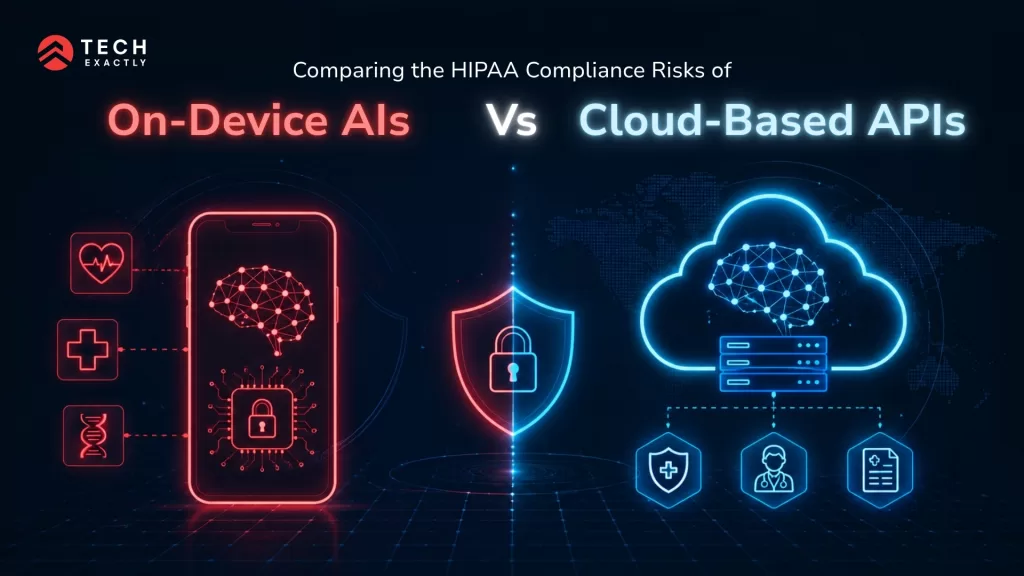
Comparing the HIPAA Compliance Risks of On-Device AI vs Cloud-Based APIs

What Is On-Device AI?
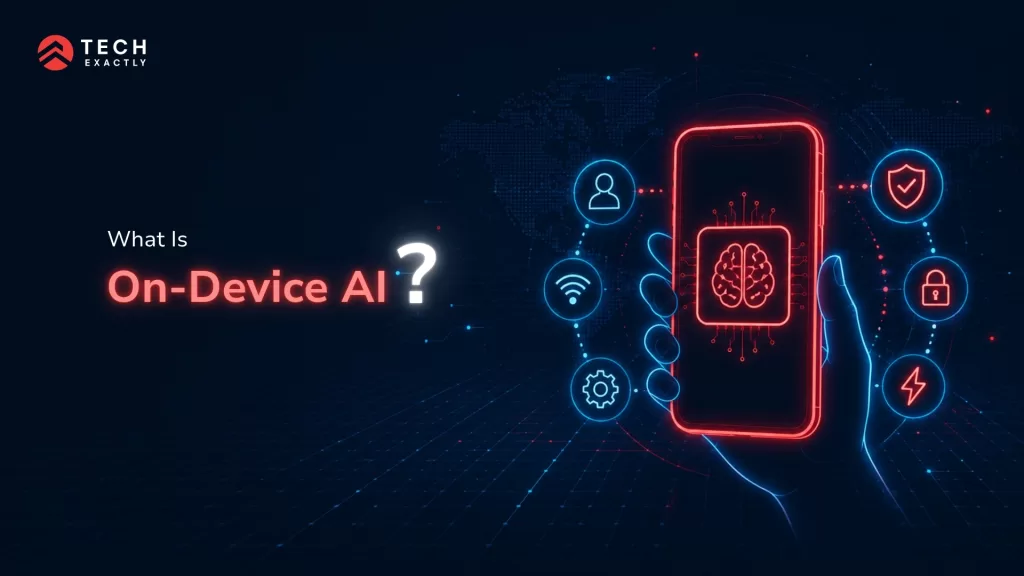
It is machine learning inference that runs directly on the hardware where data originates, a smartphone, wearable sensor, or embedded clinical terminal, without transmitting raw data to a remote server. The artificial intelligence device handles the full inference cycle locally, using a compressed model running on the device’s Neural Processing Unit (NPU).
In healthcare, on-device AI means a cardiac monitor detects arrhythmias, a glucose sensor flags dangerous trends, or a fall-detection wearable triggers an alert, all without the patient’s physiological data ever leaving their body-worn device. This is architecturally transformative for HIPAA because it eliminates data-in-transit as an attack surface entirely.
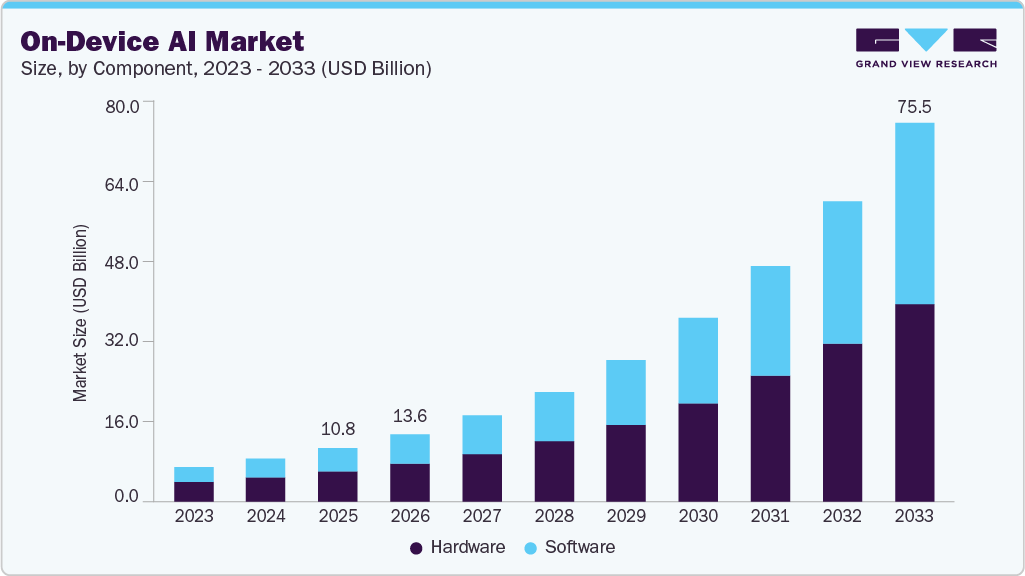
Image Source
Key characteristics:
- PHI never leaves the device during inference, and shrinks the HIPAA risk perimeter to the physical hardware
- Sub-10ms latency enables real-time clinical applications; cloud round-trips cannot match
- Full offline operation: critical for rural clinics, disaster response, and connectivity-poor environments
- Federated learning allows model personalization without centralizing raw patient data
Applications of On-Device AI
- Cardiac monitoring on wearables
Detects arrhythmias, AFib, and irregular rhythms in real time directly on the device (Apple Watch ECG, AliveCor KardiaMobile). No data leaves the sensor during classification. - Continuous glucose monitoring
On-device AI in CGM devices like Dexcom G7 predicts hypoglycemic events 20–30 minutes before they occur by analysing local glucose trend data, without cloud dependency. - Fall detection for elderly care
Accelerometer + AI on smartwatches and pendants detects fall patterns locally and triggers emergency alerts instantly. Offline-capable, critical for rural or low-connectivity settings. - Mental health + mood tracking
Apps like Woebot run lightweight NLP models on-device to analyse speech patterns and self-reported inputs, keeping sensitive mental health data entirely on the user’s phone. - Surgical tool recognition
Embedded AI in smart surgical instruments identifies tool type, usage patterns, and anomalies at the point of care in the OR, without routing video or sensor data to a cloud server mid-procedure.
What Is a Cloud Healthcare API?
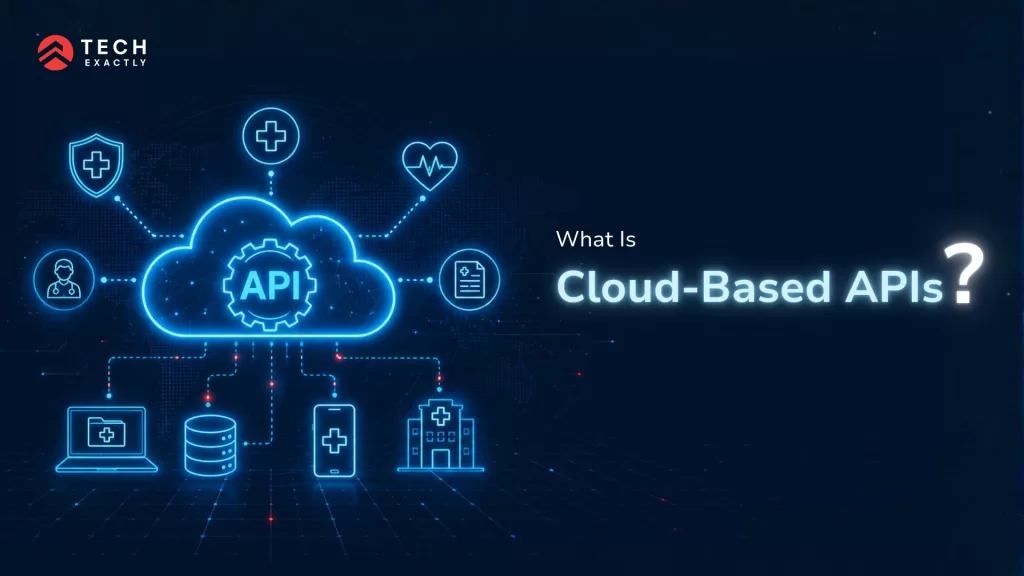
A Cloud Healthcare API is a managed, cloud-hosted interface through which healthcare applications securely send, store, and process clinical data – HL7v2 messages, FHIR resources, DICOM imaging at scale. The most prominent example is the Google Cloud Healthcare API, a HIPAA-eligible, HITRUST-certified backbone for healthcare interoperability.
In AI workflows, api healthcare architecture looks like this: a client collects patient data, transmits it over TLS to a cloud endpoint, invokes a hosted model, and receives a prediction back. The healthcare API layer handles access control, audit logging, encryption, and data residency. Google Health covers the Cloud Healthcare API under its HIPAA BAA, as do AWS HealthLake and Azure Health Data Services, but all operate under a shared responsibility model. The cloud provider secures the infrastructure; you are responsible for everything built on top of it.
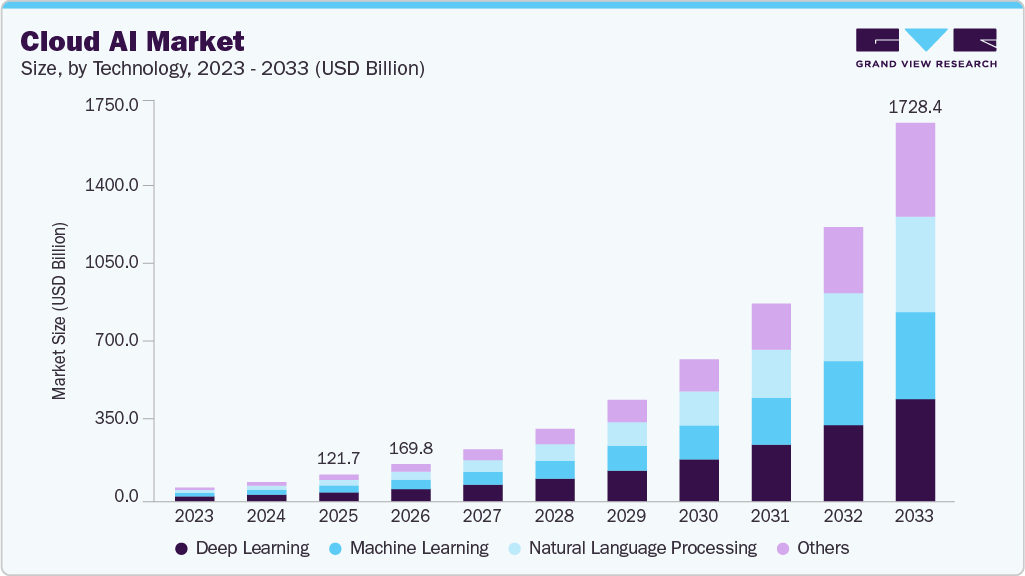
Image source
⚠️Note: Google explicitly states that the customer is responsible for ensuring environments and applications built on Google Cloud are properly configured per HIPAA. Compliance is never automatic with any cloud healthcare solutions provider.
Applications of Cloud Healthcare API
- EHR interoperability pipelines
Google Cloud Healthcare API ingests HL7v2 ADT messages from hospital systems, converts them to FHIR R4 resources, and makes them queryable across care networks in real time. - Radiology AI at scale
DICOM images from thousands of scans are routed through cloud healthcare APIs to hosted AI models (chest X-ray triage, tumour detection) that would be too large and compute-heavy to run on local hospital hardware. - Predictive readmission risk
Population-level patient data stored in FHIR datastores feeds ML models that flag high-risk patients for follow-up before discharge, as used by systems like the Cleveland Clinic on Google Cloud. - Clinical trial data aggregation
Pharmaceutical companies use cloud healthcare APIs to consolidate multi-site trial data into a unified FHIR repository, enabling real-time safety monitoring and regulatory reporting across regions. - Remote patient monitoring dashboards
Cloud APIs aggregate data streams from multiple home monitoring devices (BP cuffs, pulse oximeters, scales), normalize them into FHIR observations, and surface alerts to care coordinators through a centralized clinical dashboard.
On-device AI vs. Cloud-based API
Risk / Compliance Dimension | On-Device AI | Cloud Healthcare API |
PHI Transmission Risk | None — inference stays on the device | PHI crosses the network at every API call |
BAA Requirement | Not required for inference | Mandatory before any PHI processing |
Third-Party Vendor Risk | Minimal | Cloud provider becomes a Business Associate |
Breach Notification Scope | Narrow — device is the perimeter | Complex — may involve sub-processors, multiple jurisdictions |
Offline Operation | Full | Requires an active internet connection at every call |
Compliance Certifications | Emerging | HITRUST, SOC 2, ISO 27001/27018 available |
Audit Logging | Must be custom-built and synced | Mature — built-in Cloud Logging, SIEM integration |
EHR / FHIR Integration | Requires a custom bridge | Native FHIR R4, HL7v2, DICOM support |
Model Scalability & Updates | Constrained by hardware; signed OTA required | Instant retraining and deployment at scale |
Best Fit | Wearables, real-time monitoring, rural health | EHR interoperability, population health analytics |
HIPAA Risks: On-Device AI
On-device AI is not inherently HIPAA-compliant just because data stays local. HIPAA-compliant software developers building edge AI features must account for:
- Physical device security (§164.310): Device theft is a reportable breach event if any PHI is cached. AES-256 encryption, remote wipe, and screen-lock are mandatory on any artificial intelligence device in a clinical workflow
- Model extraction attacks: Models trained on clinical data carry population-level statistical information. Hardware-backed Trusted Execution Environments (TEEs) and weight obfuscation are required; most teams don’t plan for this at specification time
- OTA update integrity: Every over-the-air model update is a potential vector for supply chain attacks. Agencies providing HIPAA-compliant development for healthcare must implement cryptographically signed model packages as standard mobile CI/CD pipelines don’t satisfy this
- Audit trail complexity: On-device inference logs must sync to a secure backend without themselves becoming an uncontrolled PHI transmission. There are multiple ai tools for generating hipaa compliant code, but a design tension like this demands deliberate architecture from any serious hipaa compliant app development team.
Read: Top 7 Healthcare Software Development Challenges & Solutions in 2026 for how development teams navigate these compliance-engineering tradeoffs.
HIPAA Risks: Cloud-Based APIs
The 2024 Change Healthcare ransomware attack, which compromised over 100 million records through a cloud-connected vendor, is the canonical lesson for any CTO who assumed a BAA was sufficient protection.
- BAA scope gaps: Every service in your data path must be explicitly covered. Using a pre-GA or an uncovered Google Cloud service with PHI, even accidentally, constitutes a violation. This is among the most common OCR audit findings in cloud healthcare solutions deployments
- Sub-processor liability: 128 of the healthcare data breaches reported in 2025 involved business associates, not covered entities directly. Cloud providers use sub-processors for logging, security scanning, and CDN breaches. It remains your responsibility to report
- AI training on PHI: Some cloud AI vendors use customer data to improve their models by default. Any Cloud Healthcare API integration must confirm in writing, before deployment, that model training on PHI does not occur without patient authorization
- Misconfigured IAM: Overly broad project-level roles, mixed production/development datasets, and uncontrolled Pub/Sub subscriptions are not edge cases; they are the default state of an unhardened cloud project. Agencies providing HIPAA-compliant development for healthcare that skip infrastructure-as-code security reviews are shipping risk alongside features
Real-World Examples
On-Device AI — Apple Watch ECG:
Apple’s ECG app classifies cardiac rhythms directly on the Watch’s S-series chip. No PHI leaves the device during inference. Only the user-initiated summary, not raw signals or intermediate data, can optionally sync to Health Records via HealthKit, governed by explicit user consent. The on-device AI model is stored in hardware-protected memory, updated only through Apple’s signed OS pipeline, and inaccessible to third-party extraction. This is what a well-architected artificial intelligence device in a regulated health context looks like.
Cloud API — Cleveland Clinic + Google Cloud Healthcare API:
Cleveland Clinic uses Google Cloud’s Apigee platform and the Cloud Healthcare API to extend its EHR’s FHIR data layer. PHI is transmitted over a private VPN/Interconnect through IAM-gated FHIR endpoints to ML models that predict readmission risk and ED wait times. They executed the HIPAA BAA, enabled Data Access audit logs, configured CMEK, and deployed within a private VPC. Sophisticated, enterprise-grade api healthcare architecture, but it required significant compliance engineering investment. The compliance is real and earned, not inherited.

What’s the Role of On-Device AI in Wearables?
What’s the role of on-device AI in wearables clinically? It is the enabler of private, always-on patient monitoring. Sensors generate physiological data at rates that make constant cloud transmission both impractical (battery, bandwidth) and legally complex (continuous PHI transmission).
Three clinical functions:
- Real-time anomaly detection: Arrhythmia flagging, hypoglycemia alerts, SpO₂ drops requiring latency that cloud round-trips cannot match
- Minimum necessary filtering: The AI determines clinical significance before deciding whether to log or transmit anything, a built-in data minimization layer that aligns with HIPAA’s minimum necessary standard
- Personalized baseline learning: Federated on-device learning adapts to individual patient physiology without centralizing raw data
The FDA now treats AI inference on a wearable as a SaMD function; classification analysis must happen at feature specification time, not after QA. See: The Real Cost of RPM Software for how this maps to remote patient monitoring product decisions.
Case Study: How Tech Exactly Approaches This
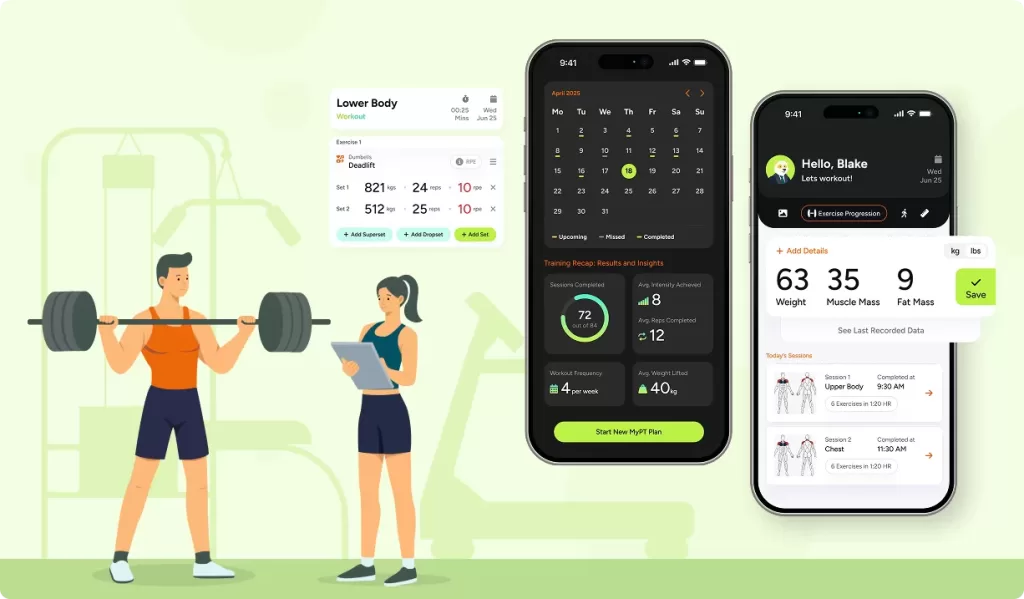
Tech Exactly’s Smart Fitness Workout App case study illustrates the architectural principle that translates directly to healthcare: personalized AI inference designed close to the user, with data flows built around privacy and performance simultaneously. In healthcare engagements, this same discipline applies – AI inference architecture decided at feature specification, compliance requirements built into the data model before schemas are defined, and HIPAA risk analysis conducted as a formal project artifact, not a pre-launch checkbox.
How to Choose Between On-device AI and Cloud-based API
Choose on-device AI when: your use case requires sub-100ms inference, you serve low-connectivity populations, continuous PHI transmission is a regulatory concern, or your product is a wearable artificial intelligence device in a clinical or SaMD context.
Choose cloud Healthcare API when: EHR interoperability (FHIR, HL7v2, DICOM) is a requirement, you need population-scale analytics, or your compliance posture benefits from HITRUST and SOC 2 certifications that established cloud healthcare solutions provide.
Choose hybrid when: you need real-time edge inference AND retrospective EHR-connected analytics. On-device AI handles inference; the Cloud Healthcare API handles structured data storage and EHR routing. Only the inference output, never raw PHI, crosses the network.
When evaluating top healthcare software development companies for HIPAA-compliant solutions, ask specifically how they handle the compliance boundary between edge inference and cloud data storage. That single question reveals more about their HIPAA engineering depth than any certification. Also read: How to Evaluate If Your Product Is Ready for AI before scoping any build. To know more, feel free to share your queries at [email protected]


