

Medical Device Software Development — IEC 62304 Compliant, FDA Ready
Tech Exactly builds FDA-ready medical device software for MedTech companies and health-tech startups. From Class A patient apps to Class C diagnostic AI, our teams deliver IEC 62304, ISO 13485, and ISO 14971 compliant development, including SaMD products requiring 510(k) submissions.
Top Rated
Clients

Transforming Businesses with Proven Results
Faster development, greater efficiency, trusted globally, and driven by referrals.
savings with AI-powered Engineering
users trust our products
efficiency boost for businesses
of new clients come from referral
Why Choose Tech Exactly For Your Medical Device Software Development Needs
6+ years in regulated software development | IEC 62304 Class B & C experience | FDA and CE submission support | ISO 13485 aligned QMS
Medical Device Software Development Services — What We Build
From Mobile Apps to AI and Cybersecurity, We Deliver End-to-End Services to Build Secure, Compliant, and Innovative Medical Software
Medical Device App Development — Companion Apps & Patient-Facing Software
Mobile apps for medical devices, including companion apps, standalone SaMD products, and patient-facing software. IEC 62304 compliant with full documentation for regulatory submission.
SaMD Development
Software as a Medical Device: diagnostic AI, clinical decision support, and image analysis. Built to meet SaMD-specific regulatory requirements from day one.
Embedded Medical Device Software Development (SiMD)
Firmware, RTOS, device drivers, and application-level software for physical medical devices. IEC 62304 compliance at every layer of the embedded stack.
AI/ML Services for Medical Devices
Diagnostic image analysis, predictive patient monitoring, and clinical decision support. Built within the FDA's AI/ML SaMD framework, like clinical validity, locked vs adaptive algorithms, & change control documentation.
Wearable Medical Device App Development
Device-side firmware, mobile companion apps, and cloud backends for wearable medical devices. BLE pairing, continuous vitals streaming, background data collection, and real-time alerting.
Cloud Deployment
Cloud infrastructure meeting HIPAA, FDA, and international regulatory requirements. Encrypted storage, audit logging, automated backup, and disaster recovery — fully documented for regulators.
Quality Management System (QMS)
Complete IEC 62304 documentation, such as software development plans, risk management files (ISO 14971), traceability matrices, and verification/validation records. Ready for regulatory audits.
Medical Device Software Development Tech Stack
What You Receive — Medical Device Software Deliverables
Software Development Plan (SDP)
Clause 5.1
Master plan covering lifecycle activities, tools, methods, and standards
Software Safety Classification
Clause 4.3
Risk-based classification (Class A/B/C) with justification
Software Requirements Specification (SRS)
Clause 5.2
Functional, performance, safety, and interface requirements
Software Architecture Design Document (SADD)
Clause 5.3
High-level architecture, SOUP identification, module decomposition
Source Code + Unit Test Results
Clause 5.5
Version-controlled code with unit test coverage reports
Integration Test Protocols & Reports
Clause 5.6
Integration testing documentation with traceability
System Test Protocols & Reports
Clause 5.7
End-to-end system testing against requirements
Requirements Traceability Matrix (RTM)
Clause 5.7
Full trace: Requirement → Design → Test Case → Test Result
Risk Management File (RMF)
ISO 14971
Hazard analysis, risk controls, risk/benefit analysis, residual risk
Usability Engineering File
IEC 62366
Formative and summative usability evaluation documentation
Software Bill of Materials (SBOM)
FDA Guidance
Complete list of software components, versions, and suppliers
Cybersecurity Documentation
FDA Guidance
Threat model, SBOM, vulnerability management plan
Configuration Management Plan
Clause 8
Version control, change control, baseline management
Software Maintenance Plan
Clause 6
Post-release monitoring, update procedures, problem resolution
Design History File (DHF)
21 CFR 820
Complete compilation of all design documentation for FDA
The Medical Device Software Development Process — IEC 62304 Lifecycle
Eight phases, full traceability, and the documentation your notified body or FDA reviewer expect.
Software Safety Classification: Laying a Compliance-Driven Foundation
Every project begins with creating a classification matrix that identifies acceptable risks and classifies software safety under IEC 62304 guidelines. By categorizing your software as Class A, B, or C, we align design, testing, and verification requirements to the necessary safety standards.
- Explicit reference to IEC 62304 Clause 4.3
- Decision tree: how we determine Class A vs B vs C
- Deliverable: Software Safety Classification Report
Requirements Analysis: Documenting Needs with Clarity and Precision
Requirements capture functional, safety, and user needs to define clear, traceable expectations that inform design and implementation.
- IEC 62304 Clause 5.2 reference
- Deliverables: Software Requirements Specification (SRS), Requirements Traceability Matrix
- How requirements connect to risk controls (ISO 14971 integration)
Structured Architectural Design: Building a Robust, Scalable Software Architecture
Our architecture is structured to streamline testing and future updates, enhancing maintainability and traceability. Our design is informed by ISO 14971 guidelines to identify and mitigate risks by design. Each module and data flow prioritizes safety, reliability, and regulatory compliance.
- IEC 62304 Clause 5.3 reference
- Deliverable: Software Architecture Design Document (SADD)
- SOUP identification and risk assessment at this stage
- Architecture review checklist
Rigorous Implementation with Code Quality Checks
Our coding standards include robust risk controls, particularly for safety-critical functions, to meet IEC 62304 requirements and deliver consistent performance. We implement peer-to-peer code reviews to maintain high-quality, error-free code, allowing each developer to assess and optimize their peers' work.
- IEC 62304 Clause 5.5 reference
- Coding standards (MISRA C for embedded, secure coding guidelines)
- Deliverables: Source code (version controlled), Unit test results with coverage metrics
- SBOM generation during implementation
Comprehensive Risk Management Aligned with ISO 14971
Tech Exactly actively applies ISO 14971 guidelines to perform hazard analysis, assessing potential risks at each development stage. We maintain a comprehensive risk management file to document identified risks, mitigations, and safety controls for each phase of development.
- Deliverable: Risk Management File (RMF) with hazard analysis, risk controls, risk/benefit analysis
- Connection to IEC 62304 Clause 7 (Risk Management)
Thorough Verification & Validation (V&V) for Quality Assurance
We conduct unit, integration, and system testing to verify that every component and function operates as intended and integrates seamlessly. We leverage IEC 62366 guidelines to ensure a user-friendly interface and intuitive instructions for use, optimizing both the user experience and patient safety.
- IEC 62304 Clause 5.6/5.7 references
- Deliverables: V&V Protocols, V&V Reports, Test Traceability Matrix
- Difference between verification (did we build it right?) and validation (did we build the right thing?)
- Usability testing per IEC 62366 (already mentioned — expand)
Meticulous Configuration Management for Consistency
We monitor all software versions and document changes, ensuring full traceability and consistent performance across updates. Every modification is carefully logged, reviewed, and tracked to prevent unauthorized changes and maintain the software’s integrity.
- IEC 62304 Clause 8 reference
- Deliverable: Configuration Management Plan, Software Version Description (SVD)
- How this connects to OTA updates for medical devices (change control)
Post-Release Support & Problem Resolution: Your Partner Beyond Launch
Proactive Monitoring and Maintenance: Post-launch, we provide ongoing support, tracking performance, addressing issues, and keeping the software compliant and up-to-date. As regulations and technology evolve, we’re here to help you keep pace, ensuring your software is always ready for future advancements.
- IEC 62304 Clause 6 reference (Software Maintenance)
- Post-market surveillance requirements
- Problem resolution process (IEC 62304 Clause 9)
- CAPA (Corrective and Preventive Action) integration
- Deliverable: Software Maintenance Plan, Problem Reports
Take a Look At Our Case Studies
We are proud of what we have built. Let us walk you through our projects.

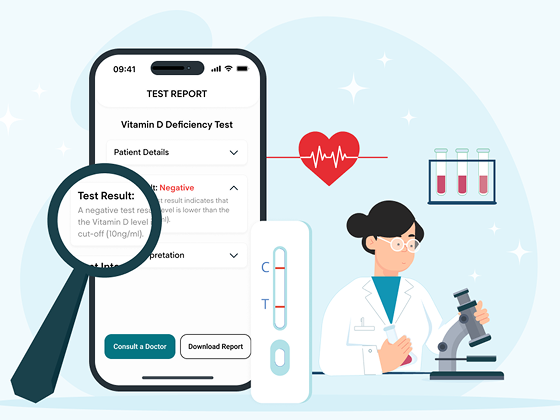
IEC 62304-Compliant Mobile App for Accurate Test Interpretation
A medical-grade mobile app to deliver ~ 70% precise interpretation of home diagnostic tests
Built under IEC 62304 for full compliance
Instant, accurate image analysis
Full traceability and validation
Engagement Models and Pricing
Fixed Price
Well-defined Class A/B projects with stable requirements
Scope, timeline, and price agreed upfront. Includes all IEC 62304 documentation.
Time & Materials
Complex Class B/C projects or R&D-phase products
Weekly time reports, sprint demos. Regulatory documentation delivered at each milestone.
Dedicated Team
Ongoing medical device products needing continuous development
A regulatory-trained team works exclusively on your product.
Regulatory Augmentation
Companies with dev teams that lack IEC 62304 expertise
We provide IEC 62304 process guidance, documentation templates, and V&V support — you keep your dev team.
FAQs
The medical device software development process follows IEC 62304 and includes 8 lifecycle stages: (1) software development planning, (2) requirements analysis, (3) architectural design, (4) detailed design, (5) unit implementation and verification, (6) integration testing, (7) system testing, and (8) release. Throughout the process, ISO 14971 risk management runs in parallel — identifying hazards, implementing risk controls, and documenting residual risk. The rigor required at each stage depends on the software's safety classification: Class A (informational), Class B (non-serious injury possible), or Class C (serious injury or death possible). Every stage produces formal documentation that becomes part of the Design History File (DHF) for regulatory submission.
SaMD (Software as a Medical Device) performs a medical function independently — for example, a mobile app that analyzes medical images to detect abnormalities. SiMD (Software in a Medical Device) is software that's part of a physical medical device — for example, firmware in an insulin pump. Both require IEC 62304 compliance. The key difference is regulatory: SaMD must demonstrate clinical validity on its own and follows its own regulatory pathway (FDA 510(k), De Novo, or PMA), while SiMD is submitted as part of the device it controls.
Medical device software development typically costs $80,000-$500,000+ depending on the software's safety classification, regulatory pathway, and complexity. A Class B companion app costs $80K-$150K. A Class B SaMD mobile app costs $120K-$250K. AI/ML diagnostic SaMD can cost $150K-$350K. The primary cost driver is documentation and compliance — typically 30-50% of total project cost for IEC 62304, ISO 14971, and FDA submission deliverables. Code development accounts for only 20-30% of total effort, unlike standard software projects.
The primary standards for medical device software are: IEC 62304 (software lifecycle process), ISO 14971 (risk management), IEC 62366 (usability engineering), ISO 13485 (quality management system), and FDA 21 CFR 820 (design controls — US). For cybersecurity, the FDA's pre-market cybersecurity guidance (2023) requires a Software Bill of Materials (SBOM) and vulnerability management plan. In Europe, the Medical Device Regulation (MDR) and CE marking requirements apply. For AI-based medical devices, the FDA's AI/ML SaMD framework adds requirements for algorithm validation and change management.
A Class B companion mobile app typically takes 4-7 months. A Class B SaMD product takes 5-9 months. Class C software (safety-critical) takes 8-14 months or longer. Timelines for medical device software development are longer than standard software because formal documentation, risk management, and verification/validation activities account for 50-60% of the total timeline. The FDA submission and review process adds additional time — a 510(k) review typically takes 3-6 months after submission.
A Software Bill of Materials (SBOM) is a complete inventory of every software component in your medical device — including open-source libraries, third-party SDKs, and their versions, licenses, and known vulnerabilities. The FDA began requiring SBOMs as part of pre-market submissions following the 2023 cybersecurity guidance. The purpose is to enable post-market vulnerability management — when a new CVE is discovered in a library (like Log4j), the FDA and device manufacturers can quickly determine which devices are affected. We generate SBOMs automatically as part of our CI/CD pipeline using tools like Syft and Grype.
Yes. While we're a software development company (not a regulatory affairs firm), our deliverables are structured specifically for regulatory submission. We produce the complete software documentation package — Design History File (DHF), requirements traceability matrix, risk management file (ISO 14971), V&V protocols and reports, and cybersecurity documentation — in the format that FDA reviewers and notified bodies expect. For 510(k) submissions, we support clients by preparing the software section of the submission. For CE marking under EU MDR, we produce the technical documentation required by notified bodies. We recommend clients also engage a dedicated regulatory affairs consultant for submission strategy — we handle the technical documentation.
Ready to Develop a Compliant, High-Quality Medical Device Solution?
Let’s discuss how we can turn your vision into a secure, IEC 62304-compliant solution that transforms patient care.
