

Software Development Outsourcing: A Complete Guide for 2026

In 2026, outsourcing is no longer just a cost-cutting tactic. It is a growth strategy. Companies use it to launch products faster, access global expertise, reduce operational risk, and stay competitive in markets shaped by AI, cloud, and automation.
Forbes states that over 70% of companies now outsource at least one IT function, and software engineering leads the list. The global IT outsourcing market is projected to surpass 1 trillion USD within the next few years, showing how central outsourcing has become to digital transformation strategies.
In this guide, you will learn:
- What is software development outsourcing
- Geographic, engagement models and benefits
- Risks and how to manage them
- Step-by-step guidance for outsourcing projects
- Trends shaping IT development outsourcing in 2026
- Top Software Development Companies for Startups & SMBs
- Why Tech Exactly is a trusted outsourcing software development company
What Is Software Development Outsourcing?
Software Development Outsourcing is the practice of hiring an external vendor or partner to design, build, test, maintain, or scale software solutions instead of relying only on an in-house team.
The in-house vs outsourcing software development trade-off comes down to responsibility: in-house teams carry the full load of hiring, infrastructure, training, and long-term management. With outsourced software development, businesses collaborate with specialists who already have the required expertise, tools, and delivery processes in place.
While cost optimisation is a stated driver, modern outsourcing focuses heavily on:
- Accessing specialised talent such as AI and cloud engineers
- Accelerated development cycles through mature delivery processes
- Agility and flexibility to pivot based on market feedback
- Risk sharing and quality assurance
In 2026, hybrid models are becoming common, where onshore product leadership works closely with offshore engineering teams. This allows businesses to balance communication, security, and budget efficiency.
Key Points
- The global IT outsourcing market is among the largest services markets worldwide, projected to exceed ~ $800 billion by 2029 and continue expanding. Source
- Today, more than 64 % of tech organisations outsource at least one software function. Source.
When Does It Make Sense to Outsource Software Development?
Deciding on outsourcing software development requires understanding where it adds tangible value. Some common business scenarios include:
- Skill Gap Fulfillment and Expert Access
When internal teams lack niche skills such as AI, blockchain, cloud architecture, or cybersecurity, outsourcing allows you to hire AI developers and other specialists without months-long recruitment. - Rapid Scaling and Delivery Speed
Hiring internal engineers often takes 8–12 weeks or more. Outsourced teams are typically staffed and ready to begin work within weeks, allowing companies to launch MVPs or key features faster. According to DesignRush, outsourcing can deliver up to 28% faster time to market for development cycles when compared to traditional in-house models. - Cost Efficiency and Budget Predictability
Outsourcing converts fixed hiring costs into flexible project pricing, often reducing overall expenses. Savings of up to 40–60% are commonly reported, especially when working with vendors in regions with lower labor rates. - Focusing on Core Business Priorities
Engineering can be a significant distraction from core business strategy. By outsourcing custom software development, internal leadership can prioritise product strategy, market expansion, partnerships, and customer success. - Legacy Modernization and Technical Debt Reduction
Organisations often face antiquated systems that drain resources. Outsourcing provides expertise in modernising platforms, migrating to the cloud, and integrating AI without disrupting internal operations.
Tech Exactly partnered with a client to modernise their fintech platform, significantly improving performance and reducing manual reconciliation errors.
Outsource Software Development
Build faster with Tech Exactly's dedicated software development teams. Reduce costs, accelerate delivery, and scale with confidence.
Types of Software Development Outsourcing by Geography
Choosing the right geography is a key part of outsourcing because it directly affects costs, communication, and delivery management. Businesses that outsource software development should balance budget expectations with collaboration needs and compliance requirements.
Outsource Model | Cost | Communication | Time Zone | Management Ease |
| Onshore | High | Very easy, same language and culture | Full overlap | Very convenient, strong legal alignment |
| Nearshore | Medium | Smooth with minor cultural differences | Partial to full overlap | Easier collaboration with real-time Agile work |
| Offshore | Low | Needs structured communication | Limited overlap | Requires strong processes and governance |
| Homeshoring | Medium | Easy with remote collaboration tools | Full national overlap | Convenient with local compliance benefits |
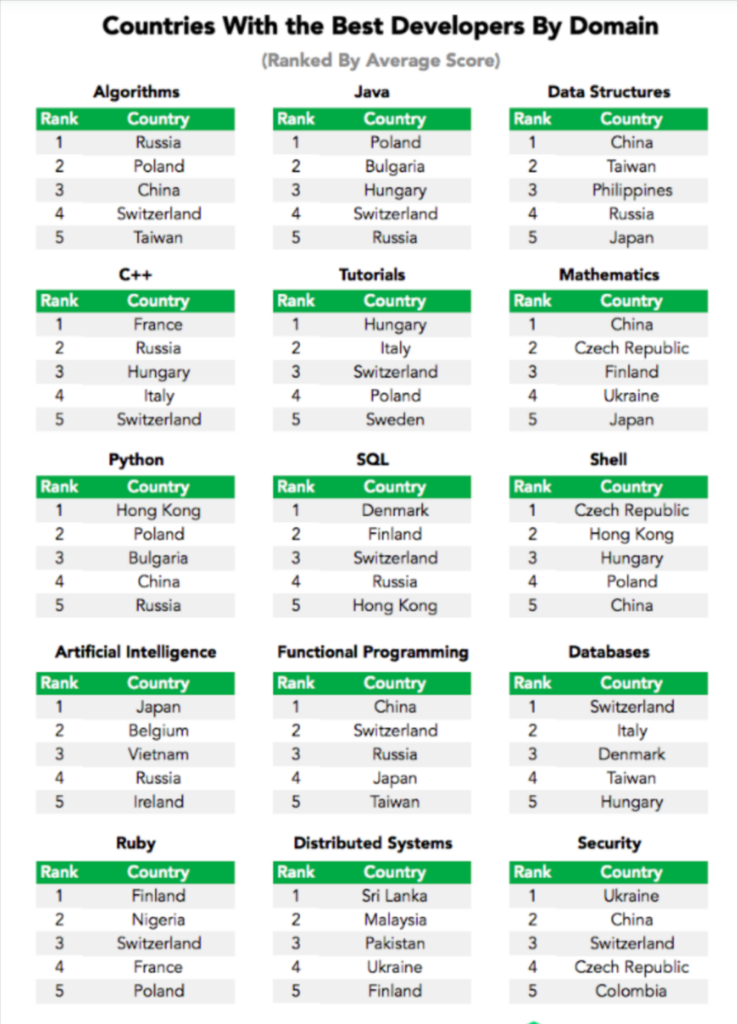
Image source: HackerRank
Software Development Outsourcing from $20/Hour
Scale your team with experienced software developers starting at just $20/hour. Build web, mobile, AI, and custom software solutions with Tech Exactly.
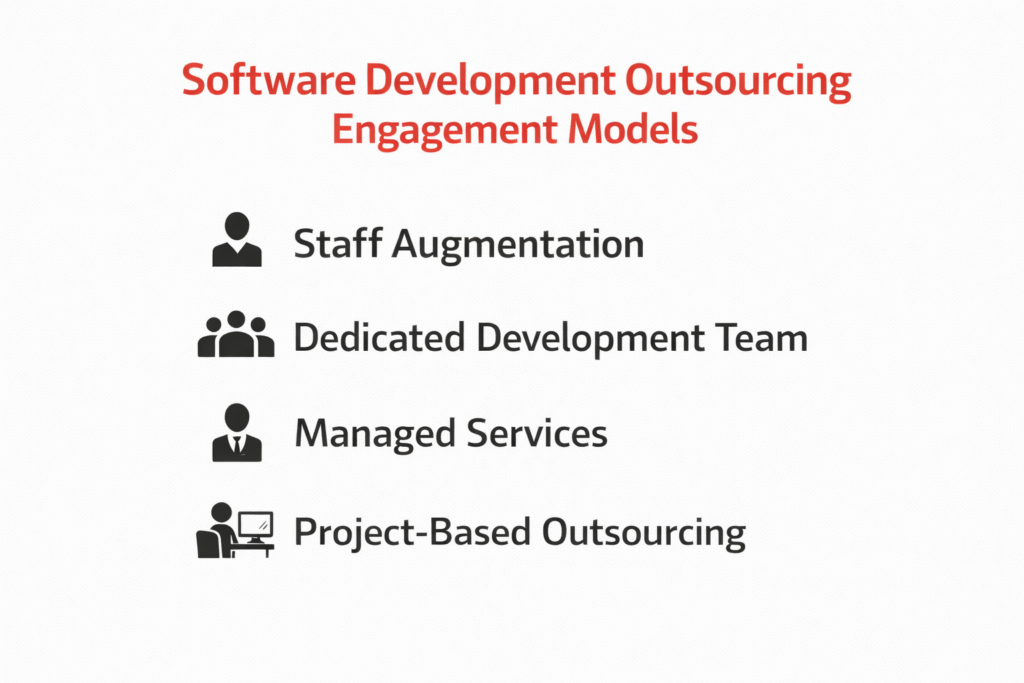
Software Development Outsourcing Engagement Models
The engagement model you choose shapes how your software outsourcing partnership works in practice. It affects control, budget, delivery, and long-term scaling, so selecting the right approach is as important as choosing the right vendor.
Staff Augmentation
Staff augmentation allows you to outsource software developers to strengthen your internal team while retaining full project management. It is best when you need quick access to specialised skills without handing over ownership.
- High flexibility and fast onboarding
- You control scope, priorities, and process
- Ideal for short-term gaps or niche expertise
Dedicated Development Team
A dedicated development team works exclusively on your product and functions as an extension of your organisation. This is a common model in outsourcing custom software development for long-term products.
- Predictable pricing and stable delivery
- Supports Agile development and continuous scaling
- Strong collaboration with a long-term partner
▶️If you are building a mobile app, you might like reading this blog.
Managed Services
In managed services, the outsourcing company takes responsibility for ongoing operations such as support, maintenance, or infrastructure. This model suits businesses focused on innovation while delegating execution.
- Vendor-led management and service-level accountability
- Strong focus on security, uptime, and quality
- Ideal for mature systems and operational stability
Project-Based Outsourcing
Project-based outsourcing is used for clearly defined projects with fixed scope and budget. The partner manages end-to-end delivery, making it suitable for MVPs or one-time builds.
- Clear scope and timeline
- Lower internal involvement required
- Best when requirements are well documented
Key Benefits of Software Development Outsourcing
Today, outsourcing helps businesses move faster, innovate smarter, and manage costs more effectively. As per Deloitte, 76% of organisations outsource IT functions, not just to save money but to improve delivery speed, access global expertise, and scale efficiently.
Cost Optimization
Companies that outsource avoid high fixed hiring and infrastructure expenses. Instead, they pay for the exact skills and capacity needed, improving budget control while maintaining strong quality standards.
Example of the cost of outsourcing software development
| Expense Area | In-House AI Developer (1 Year – US) | Outsourced AI Developer via Tech Exactly (6-Month Project) |
| Base Salary | $130,000 | — |
| Benefits & Taxes (25–30%) | $35,000 | Included in vendor pricing |
| Recruitment Costs | $10,000 | $0 |
| Infrastructure & Tools | $8,000 | Included |
| Total Cost | ~$183,000 per year | ~$65,000–$85,000 total (this is not the actual pricing but just an example) |
By choosing to hire AI developers through a reliable outsourcing company like Tech Exactly, companies can reduce upfront costs while maintaining strong delivery, scalability, and technical quality.
Access to Global Talent
Outsourcing software developers gives businesses access to specialists in AI, cloud, DevOps, and security who may be difficult or expensive to hire locally. This speeds up innovation and reduces recruitment delays.
Read More: When to Use APIs vs Custom Models in AI App Development (Complete Guide)
Scalability & Flexibility
With software development outsource models, teams can expand or shrink based on product needs. This flexibility supports rapid scaling without long-term staffing risks.
Focus on Core Business
An experienced outsourcing software development company handles technical delivery, allowing internal leaders to focus on growth, partnerships, and strategy instead of day-to-day development challenges.
Faster Time-to-Market
Speed is one of the biggest benefits of outsourcing.
Sattwik, Business Analyst at Tech Exactly, shares an example: A startup approached us with a strong product idea but limited internal bandwidth and mobile development expertise. They needed a fast, structured execution plan to move from concept to launch without delays.
We began with a detailed discovery call to understand their goals, users, and technical expectations. Once the scope, timeline, and cost estimate were aligned, we assembled a dedicated software development team and defined a lean MVP roadmap. Through focused Agile sprints, regular demos, and continuous feedback, the product moved from idea to working release in just three months.
Result: A stable, market-ready product launched on time, allowing the startup to validate user demand and confidently plan their next growth phase.
Access to Modern Technologies
Through outsourcing IT development, companies gain exposure to modern frameworks, cloud-native architecture, and automation tools that improve long-term product performance.
Risk Sharing & Delivery Stability
A reliable partner reduces uncertainty through structured contracts, milestone tracking, and mature management practices, lowering the risk of delays or quality issues.
Ongoing Support & Maintenance
Long-term outsourcing ensures products continue to improve after launch with regular updates, monitoring, and performance optimisation.
Risks and Challenges of Software Development Outsourcing
While outsourcing brings strong business value, challenges can arise if collaboration and expectations are not aligned early. Most issues in outsourced software development stem from gaps in communication, planning, or governance rather than technical capability.
Common risks include:
- Communication gaps – Time zone differences and unclear updates can affect delivery timelines and slow decision-making.
- Unclear scope and requirements – Poor discovery in outsourcing software development projects often leads to scope creep and unexpected costs.
▶️Read our case study on how we developed a workout app without any solid blueprint from the founder.
- Quality inconsistencies – Without defined standards, software developer outsourcing can result in uneven code quality and rework.
- Security and compliance concerns – Weak contract terms or unclear data policies may create security and regulatory risks — especially for regulated builds like HIPAA-compliant app development.
💡Tech Exactly Tip:
Successful IT development outsourcing depends less on the lowest pricing and more on choosing a partner with mature processes, clear communication, and proven project governance.
How to Mitigate Software Development Outsourcing Risks
- Define clear requirements early – Well-documented scope, timelines, and success metrics reduce confusion in outsourcing development projects.
- Choose the right partner – Work with experienced experts who specialize in your industry, not just general software developer outsourcing providers.
- Set communication rhythms – Weekly reviews, sprint demos, and shared dashboards improve visibility and delivery stability.
- Establish quality standards – Use code reviews, automated testing, and CI/CD to maintain consistent quality across distributed teams.
- Secure contracts and governance – Strong SLAs, IP protection, and data security policies are essential.
- Start small, then scale – Pilot projects help evaluate performance before expanding into a larger dedicated development team or long-term engagements.
- Use modern collaboration tools – Transparent task tracking and documentation reduce dependency on individuals and support smoother integration.
- Plan knowledge transfer – Proper documentation and onboarding ensure continuity if team members change during the outsourcing lifecycle.
How to Outsource Software Development: Step-by-Step Process
Follow these concise steps to successfully outsource and ensure smooth delivery and long-term collaboration:
Step 1 — Define Goals, Scope & Budget
Document objectives, functional requirements, technology needs, and budget to reduce scope creep.
Step 2 — Choose the Right Outsourcing Model
Pick staff augmentation, dedicated development team, managed services, or project-based outsourcing based on control, flexibility, and scaling needs.
Step 3 — Shortlist and Evaluate Vendors
Assess outsourcing companies for expertise, past projects, security, and Agile process; avoid choosing by pricing alone. If you’re weighing talent marketplaces, our Toptal vs Turing vs Crossover comparison breaks down the real trade-offs. You can also check platforms like Clutch, Goodfirms, Business Of Apps and TopDevelopers.
Step 4 — Contracting & Legal Setup
Protect IP, data, and compliance with strong contracts, SLAs, and confidentiality agreements.
Step 5 — Onboarding & Project Kickoff
Align tools, team, and workflows; ensure knowledge transfer and smooth project start.
Step 6 — Delivery, Communication & Control
Use sprints, milestone reviews, and dashboards to maintain quality, track budget, and manage outsourcing projects.
Step 7 — Scaling, Long-Term Cooperation or Exit
Plan for future growth, ongoing support, or knowledge transfer with a reliable software development company.
How Much Does Software Development Outsourcing Cost in 2026?
The costs depend on region, engagement model, team size, and project complexity. Choosing the right software development outsourcing company ensures predictable budget and quality delivery.
Here’s a short reference table for 2026 pricing:
| Region / Model | Hourly Rate (USD) | Features |
| US / Onshore | $100–$180 | High-quality, fully aligned, regulated projects, higher costs |
| Europe / Nearshore | $50–$100 | Overlapping time zones, Agile-friendly, good delivery and management |
| Asia / Offshore | $25–$50 | Large talent pool, lower pricing, requires strong communication and process |
| Homeshoring (Remote In-Country) | $60–$120 | Cost-effective, legal certainty, flexible team, moderate budget |
Factors influencing cost: project scope, team expertise, technology stack, contract type (T&M vs Fixed Price vs Dedicated Team), and required security or compliance standards — healthcare app compliance across USA and UK, for example, can add 15–25% to any project budget.
💡 Tip: To optimise costs without compromising quality on production concerns like latency in AI applications, you can hire AI developers, mobile app developers, or even iOS or Android developers from Tech Exactly.
Software Development Outsourcing Trends in 2026
In 2026, outsourcing is evolving beyond cost savings. Companies now seek faster delivery, access to specialised teams, and measurable ROI. Knowing these trends helps you choose the right outsourcing company and plan strategic development projects.
Growing Popularity of Nearshore Outsourcing
- 55% of North American firms prefer nearshore outsourcing to reduce time zone gaps and improve communication.
- Enables Agile processes, faster iterations, and easier travel for workshops.
From Cost Savings to Business Value and ROI
- Outsourcing is shifting focus from cost to business outcomes.
- Startups can leverage outsourced software development to scale faster and access top talent. Read more: Outsource vs Hire.
AI-Driven and Automation-First Development
- 48% of companies now integrate AI tools in software developer outsourcing for testing, coding, and process automation.
- Hiring specialized AI developers via Tech Exactly improves efficiency and quality.
Rapid Adoption of Low-Code and No-Code Platforms
- Enables quick prototyping and faster delivery.
- Reduces budget needs while maintaining scalable solutions for outsourcing software development projects.
Expansion of Multi-Cloud and Hybrid Cloud Strategies
- Multi-cloud adoption is expected to reach 92% by 2026.
- Requires software development outsource teams with cloud architecture, security, and compliance expertise.
Stronger Focus on Cybersecurity and Data Protection
- 62% of outsourcing failures are linked to weak security practices, communication errors
- Vendors now follow strict encryption and GDPR/HIPAA standards to protect sensitive data.
Sustainability and Green IT in Software Development
- Consciously understanding why outsource software development reduces energy use and carbon footprint.
- Supports sustainable processes while maintaining strong delivery and quality.
💡 Tip: Following these trends ensures your outsourcing software development strategy delivers value, reduces risks, and leverages modern technologies. For insights on scaling and team optimisation, check: Software Development Company.
Top Software Development Companies for Startups & SMBs
For startups and SMBs, software development outsourcing has become a key strategy to build high-quality digital products without the overhead of large in-house teams. By outsourcing development, businesses can reduce costs, access global talent, and accelerate time-to-market, all while focusing on core business growth.
Choosing the right outsourcing partner is critical, as it directly impacts product quality, scalability, and long-term success. Below are some of the top software development companies that are well-suited for startups and SMBs:
1. Tech Exactly — Leading Software Development Outsourcing Partner
Tech Exactly is a trusted name in software development outsourcing, known for helping startups and SMBs transform ideas into scalable and user-friendly digital products. With a strong emphasis on product thinking, agile methodologies, and user experience, the company ensures that every solution is aligned with business goals.
What sets Tech Exactly apart is its startup-first approach. The team collaborates closely with founders to validate ideas, build MVPs quickly, and iterate based on real user feedback. This approach helps reduce risk, optimize development costs, and accelerate product launches.
Key strengths:
- Expertise in software development outsourcing and MVP development
- Agile, transparent, and collaborative workflows
- Strong focus on scalability, performance, and UX
- End-to-end product development (from idea to scale)
- Proven experience working with startups and SMBs
2. ELEKS — Innovation-Driven Software Development
ELEKS is known for delivering high-quality, innovation-driven solutions, making it a strong choice for startups with complex technical requirements.
Key strengths:
- Expertise in AI, data science, and enterprise systems
- Strong R&D capabilities
- Scalable outsourcing services
3. Altar.io — Product-Focused for Startups
Altar.io specializes in helping startups build and validate products with a strong focus on MVP development and product-market fit.
Key strengths:
- Product discovery and MVP development
- Dedicated startup teams
- Strong UX/UI design
4. Vention — Scalable Development Teams
Vention provides access to global engineering talent, allowing startups to scale their development teams quickly through software outsourcing.
Key strengths:
- Flexible team scaling
- Wide talent pool
- Fast onboarding
5. Software Mind — End-to-End Outsourcing Services
Software Mind offers full-cycle software development outsourcing services, supporting businesses from initial idea to deployment and beyond.
Key strengths:
- Dedicated teams
- Cloud and digital transformation expertise
- Long-term partnership model
6. Devox Software — Cost-Effective Development Partner
Devox Software provides tailored software outsourcing services for startups looking to build and scale efficiently.
Key strengths:
- MVP and product scaling expertise
- Full-cycle development
- Cost-effective solutions
Why Software Development Outsourcing Matters
For startups and SMBs, software development outsourcing is not just about saving costs—it’s about gaining a competitive edge. It enables businesses to:
- Access specialized technical expertise
- Speed up product development and releases
- Scale teams based on project needs
- Focus on innovation and business growth
Why Choose Tech Exactly as Your Software Development Outsourcing Partner?
Successful outsourcing projects depend on more than just coding expertise. It requires a partner who understands product strategy, user expectations, and long-term scalability. Tech Exactly combines experienced engineers, structured agile processes, and transparent management to deliver reliable outsourced software development that supports real business growth.
We help startups and enterprises outsource custom software development across web, mobile, cloud, and AI solutions while maintaining strong security, consistent code quality, and predictable delivery. Our flexible engagement models make IT development outsourcing smooth and scalable, whether you are launching a new product or expanding an existing platform. If you are still evaluating whether outsourcing is right for you, this guide on Outsource vs Hire can help clarify the decision.
What you can expect when working with Tech Exactly:
- A dedicated, skilled team aligned with your product vision
- Flexible scaling as your roadmap evolves
- Clear scope, transparent pricing, and structured contracts
- Strong focus on quality, security, and smooth collaboration
As an experienced Software Development Company, we focus on long-term partnerships, not just short-term delivery.
If you are looking for a reliable partner to know where to outsource software development, we can start the conversation or message us at [email protected]
FAQ
Look for a partner with proven experience in outsourcing projects, strong communication practices, and a mature Agile process. Review case studies, technical expertise, and industry exposure before you outsource software development. This guide can help: 👉 Outsource vs Hire
Choosing only based on low pricing, unclear scope, and weak contracts often leads to failure. Successful outsourcing software development depends on clarity, collaboration, and shared goals.
Yes. It saves recruitment, infrastructure, and operational costs while providing access to experienced developers.
Software development outsourcing is hiring an external company or team to design, develop, and maintain your software instead of building an in-house team.
Businesses choose Software development outsourcing to reduce costs, access global talent, scale faster, and speed up product launches.
Far far away, behind the word mountains, far from the countries Vokalia and Consonantia, there live the blind texts. Separated they live in Bookmarksgrove right at the coast
The main Software development outsourcing models include:
- Dedicated team
- Project-based
- Staff augmentation
- Offshore / Nearshore / Onshore
Look for proven experience, strong communication, security practices, transparent pricing, and post-launch support.
Reputable companies ensure security through NDAs, secure code repositories, data encryption, and compliance standards.
Absolutely. It helps startups build MVPs faster, reduce burn rate, and scale without long-term hiring commitments.
Outsourcing in software development refers to hiring an external company or remote development team to design, build, test, or maintain software products instead of relying entirely on an in-house team.
Businesses choose software development outsourcing to reduce operational costs, access global talent, speed up product development, and focus internal resources on core business activities.
The most popular software outsourcing models include the dedicated team model, staff augmentation, and project-based outsourcing. These models help companies scale their development teams based on project needs.
Some common software development outsourcing risks include communication barriers, lack of project visibility, security concerns, and quality issues. These risks can be minimized by selecting an experienced outsourcing partner and setting clear expectations.
To successfully outsource software engineering, companies should define project goals, choose the right outsourcing model, establish clear communication channels, and work with experienced development partners.
Projects such as mobile app development, SaaS platforms, enterprise software, MVP development, and product modernization are commonly outsourced because they require specialized expertise and scalable teams.
Companies can reduce software development outsourcing risks by signing clear contracts, using agile development practices, maintaining regular project updates, and ensuring strong collaboration between internal and external teams.
Before choosing outsourcing in software development, companies should evaluate technical expertise, communication processes, development methodology, security standards, and the outsourcing provider’s industry experience.
Different software outsourcing models allow businesses to expand or reduce development resources based on project requirements, ensuring flexibility and faster product development.
Software development outsourcing is the practice of hiring an external company or team to handle software development tasks such as design, development, testing, or maintenance instead of using an in-house team. It allows businesses to expand their technical capabilities without increasing internal headcount.
Businesses adopt software outsourcing and development to reduce operational costs, access global engineering talent, and accelerate product development without long recruitment processes. It is commonly used by startups and enterprises that need to scale quickly.
The outsourcing of software development is usually categorized by location:
Onshore outsourcing – outsourcing to a team in the same country
Nearshore outsourcing – outsourcing to a nearby country with similar time zones
Offshore outsourcing – outsourcing to distant countries for cost efficiency.
When businesses outsource software developers, they commonly choose between:
Dedicated team model – a long-term remote development team
Project-based model – for fixed-scope projects
Staff augmentation – adding external developers to an existing team.
The main benefits of software outsourcing and development include:
Faster time to market
Access to specialized developers
Lower development and hiring costs
Easier scalability for growing projects.
Companies usually outsource software developers when their internal team lacks specific technical skills, when project deadlines are tight, or when they want to scale development without hiring full-time employees.
Common risks in outsourcing of software development include communication challenges, time-zone differences, security concerns, and potential quality issues. These risks can be reduced by choosing a reliable outsourcing partner and maintaining clear project communication.
To succeed in software outsourcing and development, companies should evaluate the vendor’s technical expertise, past projects, communication process, security practices, and ability to integrate with the internal development workflow.
Businesses often outsource projects such as mobile apps, SaaS platforms, web applications, enterprise software, and MVP development, especially when they need specialized skills or faster product delivery.
Yes. Startups frequently use software outsourcing and development to build MVPs, reduce development costs, and quickly access experienced engineers without building a full internal team.
Development outsourcing software is the process of hiring external teams or companies to handle software development instead of relying on in-house developers. It helps businesses reduce costs, improve efficiency, and access global expertise.
Outsourcing software developers allows companies to save on hiring and infrastructure costs while gaining access to skilled professionals worldwide. It also speeds up development and lets businesses focus on core activities.
The main benefits include cost savings, faster time-to-market, access to a global talent pool, flexibility in scaling teams, and reduced operational burden.
Some risks include communication challenges, time zone differences, data security concerns, and potential quality issues. These can be minimized with proper planning and choosing the right partner.
To select the right outsourcing software developers, evaluate their technical expertise, portfolio, client reviews, communication skills, and experience in your industry.
The most common models include the dedicated team model, fixed-price model, and time & material model. Each model suits different project needs and budgets.
Yes, development outsourcing software is ideal for startups as it reduces upfront costs, provides access to experienced developers, and helps launch products faster without building a full in-house team.
The cost of outsourcing software developers depends on factors like project complexity, developer expertise, location, and engagement model. Rates vary across regions and technologies.
You can ensure quality by defining clear requirements, setting milestones, maintaining regular communication, using agile methodologies, and conducting frequent performance reviews.
Industries like healthcare, fintech, eCommerce, logistics, and education benefit greatly from development outsourcing software due to their need for scalable and specialized solutions.
Time zone differences can impact communication, but with proper scheduling and collaboration tools, teams can work efficiently and even achieve faster turnaround times.
The future of outsourcing software developers is driven by AI, automation, and remote work. Businesses will increasingly adopt hybrid and global outsourcing models to stay competitive.
Software development outsourcing is the process of hiring external teams or companies to handle your software projects. Businesses often outsource IT software to reduce costs, access global talent, and accelerate development timelines.
Companies choose to outsource IT software to save operational costs, access specialized expertise, scale teams quickly, and focus on core business activities without managing in-house developers.
To outsource a software developer, define your project requirements clearly, choose the right outsourcing model (freelancer, agency, or dedicated team), evaluate portfolios, and ensure proper communication and contracts.
When you outsource a software developer, you typically hire someone to write and maintain code. When you outsource a software engineer, you may get broader expertise including system architecture, scalability, and technical strategy.
You can outsource software engineers through:
- Dedicated team model
- Fixed-price model
- Time and material model
Each model suits different project scopes and flexibility needs.
Yes, outsourcing is often more cost-effective than in-house hiring. Businesses that outsource IT software save on infrastructure, salaries, and training while still maintaining high-quality output.
Far far away, behind the word mountains, far from the countries Vokalia and Consonantia, there live the blind texts. Separated they live in Bookmarksgrove right at the coast
Far far away, behind the word mountains, far from the countries Vokalia and Consonantia, there live the blind texts. Separated they live in Bookmarksgrove right at the coast
Software development Outsourcing is the practice of hiring external teams or companies to handle software design, development, testing, or maintenance. Businesses collaborate with outsourcing partners through defined workflows, communication tools, and project management systems.
Companies opt for Software development Outsource services to reduce development costs, gain access to global expertise, speed up delivery, and focus on strategic business goals rather than technical execution.
The main types of Software development Outsourcing include:
- Offshore outsourcing (different country)
- Nearshore outsourcing (neighboring countries)
- Onshore outsourcing (same country)
- Dedicated team model
- Staff augmentation
Yes, Software development Outsourcing is highly beneficial for small businesses and startups. It allows them to build products without investing heavily in hiring full-time developers or setting up infrastructure.
Quality in Software development Outsourcing can be ensured through:
- Clear project requirements
- Agile methodologies
- Regular testing and QA processes
- Continuous communication and feedback loops
Some challenges in Software development Outsource projects include:
- Communication barriers
- Time zone differences
- Lack of transparency
- Data security risks
These can be mitigated with proper planning and reliable partners
The cost of Software development Outsourcing depends on factors like project complexity, team size, technology stack, and location of the outsourcing partner. Offshore outsourcing is generally more cost-effective compared to onshore models.
To select the right Software development Outsource partner, consider:
- Industry experience
- Technical expertise
- Client reviews and case studies
- Communication practices
Security and compliance standards
Industries that benefit from Software development Outsourcing include:
- Healthcare
- Fintech
- E-commerce
- SaaS
- Logistics
- Education technology
Yes, Software development Outsourcing enables businesses to scale teams up or down quickly based on project needs, without long-term hiring commitments.
Software development Outsourcing can be secure if the vendor follows strict security protocols such as NDAs, data encryption, secure coding practices, and compliance with regulations like GDPR or HIPAA.
The future of Software development Outsourcing is driven by trends like AI-powered development, remote-first teams, cloud-native solutions, and increased demand for specialized tech expertise.
Software Development Outsourcing is the process of hiring an external team or company to design, develop, or maintain software applications instead of relying on in-house developers. It helps businesses reduce costs and access global expertise.
A company should consider Software Development Outsourcing when it lacks in-house expertise, needs faster project delivery, wants to reduce development costs, or plans to scale its engineering team quickly.
The main benefits of Software Development Outsourcing include cost savings, access to a global talent pool, faster time-to-market, flexibility in scaling teams, and the ability to focus on core business activities.
Common Software Development Outsourcing models include:
- Dedicated development teams
- Staff augmentation
- Fixed-price projects
- Time and material model
To choose the right Software Development Outsourcing partner, evaluate their technical expertise, industry experience, portfolio, communication practices, and client reviews. A strong cultural fit and transparency are also important.
Industries such as healthcare, fintech, eCommerce, logistics, education, and SaaS benefit greatly from Software Development Outsourcing due to their need for rapid innovation and specialized skills.
Some common challenges in Software Development Outsourcing include time zone differences, communication gaps, quality assurance issues, and data security risks. Proper planning and management can mitigate these challenges.
Businesses can ensure quality in Software Development Outsourcing by setting clear requirements, using agile methodologies, conducting regular code reviews, and maintaining continuous communication with the outsourcing team.
The cost of Software Development Outsourcing varies depending on factors like project complexity, developer expertise, location, and engagement model. Offshore outsourcing is generally more cost-effective than onshore options.
Yes, Software Development Outsourcing is ideal for startups as it reduces hiring costs, speeds up product development, and provides access to experienced developers without long-term commitments.
Software Development Outsourcing allows companies to scale development teams up or down quickly based on project needs, making it easier to manage changing workloads efficiently.
Software Development Outsourcing services typically include custom software development, mobile and web app development, UI/UX design, testing, maintenance, and ongoing support.
Software Development Outsourcing Projects involve hiring external teams or vendors to handle software design, development, testing, or maintenance. Businesses choose outsourcing to reduce costs, access global talent, and accelerate product delivery.
Companies choose to outsource developers to save on recruitment costs, reduce time-to-hire, and gain access to specialized expertise. Outsourcing also provides flexibility to scale teams based on project requirements.
Top Software Development Outsourcing Companies follow structured development processes like Agile, conduct regular code reviews, and implement strict QA testing to ensure high-quality deliverables.
The common models include:
- Dedicated Team Model
- Fixed Price Model
- Time & Material Model
Each model is suited for different types of Software Development Outsourcing Projects depending on scope and flexibility.
Look for experience, technical expertise, client reviews, communication practices, and portfolio. The best Software Development Outsourcing Companies align with your business goals and offer transparency throughout the project.
Yes, if you work with trusted vendors. Reputable companies use NDAs, secure development environments, and compliance standards to protect your data during Software Development Outsourcing Projects.
Outsourcing reduces operational costs, eliminates infrastructure expenses, and allows businesses to pay only for the resources they need. This makes Software Development Outsourcing Projects more cost-efficient than in-house development.
Common challenges include communication gaps, time zone differences, and quality control issues. However, experienced Software Development Outsourcing Companies mitigate these risks with proper project management and communication tools.
Use project management tools like Jira, maintain regular communication, set clear KPIs, and define milestones. Successful Software Development Outsourcing Projects depend on collaboration and transparency.
Industries like healthcare, fintech, eCommerce, and SaaS benefit significantly as they require scalable, cost-effective, and high-quality development solutions from outsourcing partners.
Absolutely. Startups can outsource developers to quickly build MVPs, reduce initial investment, and access skilled talent without long-term commitments.
Key trends include AI-driven development, cloud-native solutions, cybersecurity focus, and increased demand for specialized outsourcing partners offering end-to-end services.
To understand how to successfully outsource software development, companies should:
- Clearly define project requirements and goals
- Choose the right outsourcing partner with proven expertise
- Establish transparent communication channels
- Use agile methodologies for flexibility
- Set measurable KPIs and milestones
A well-structured approach ensures higher efficiency and better project outcomes.
Outsourcing offers multiple advantages, including:
- Cost efficiency and reduced operational expenses
- Access to a global pool of skilled developers
- Faster time-to-market
- Scalability and flexibility
- Focus on core business activities
Offshore outsourcing involves hiring a development team from a different country, often in a different time zone. It is a popular model for businesses looking to reduce costs while maintaining high-quality output.
For outsourcing software development offshore making it work, companies should:
- Align expectations and define clear deliverables
- Use collaboration tools like Slack, Jira, or Trello
- Schedule overlapping working hours for better coordination
- Prioritize cultural alignment and communication
Conduct regular performance reviews
Some common challenges include:
- Communication barriers
- Time zone differences
- Data security concerns
- Quality control issues
- Lack of project visibility
These can be mitigated with proper planning and governance.
When selecting a partner, consider:
- Technical expertise and portfolio
- Client reviews and testimonials
- Communication skills
- Pricing models and transparency
- Security and compliance standards
Common pricing models include:
- Fixed price model
- Time and material model
- Dedicated development team model
Each model suits different project scopes and business needs
Yes, outsourcing is highly beneficial for startups and SMBs as it allows them to access expert developers without the high costs of building an in-house team.
To maintain security:
- Sign NDAs and legal agreements
- Ensure compliance with standards like GDPR or HIPAA
- Use secure communication channels
- Implement strict access controls
Industries such as healthcare, fintech, eCommerce, logistics, and education frequently benefit from outsourcing due to the need for specialized skills and scalable solutions.
The future includes increased adoption of AI-driven development, cloud-based collaboration, and hybrid outsourcing models that combine onshore, nearshore, and offshore teams.
Software outsource refers to the process of hiring external development teams or companies to design, build, and maintain software solutions instead of relying on an in-house team. Businesses collaborate with these experts to accelerate development, reduce operational costs, and access specialized skills while maintaining focus on their core activities.
There are several important reasons to outsource software development, including cost efficiency, faster time-to-market, access to a global talent pool, and flexibility in scaling teams. It also helps businesses reduce hiring challenges and focus more on innovation and business growth.
To successfully outsource software and development, companies should clearly define project requirements, choose a reliable outsourcing partner, establish transparent communication, and use agile methodologies. Regular updates, milestone tracking, and quality checks also ensure smooth collaboration and better results.
Outsourced software products are applications developed by third-party teams, including mobile apps, web platforms, SaaS solutions, and enterprise systems. These are ideal for startups, SMEs, and enterprises looking to build high-quality products quickly without investing heavily in internal development teams.
Yes, outsourced software products are designed to scale as your business grows. With ongoing maintenance, upgrades, and support from outsourcing partners, businesses can continuously improve performance, add new features, and adapt to changing market needs.
Businesses use Software Development Outsourcing to reduce costs, access global talent, and speed up development.
Popular Software Development Outsourcing Trends include AI development, cloud solutions, remote teams, and cybersecurity-focused applications.
Yes, Software Development Outsourcing helps businesses save money on hiring, infrastructure, and training.
Industries like healthcare, fintech, eCommerce, education, and logistics widely use Software Development Outsourcing services.
Check the company’s experience, portfolio, client reviews, communication process, and technical expertise.
The common models are dedicated teams, staff augmentation, fixed-price projects, and time & material models.
Software Development Outsourcing Trends help startups launch products faster, reduce costs, and adopt modern technologies.
Some risks include communication gaps, project delays, and security concerns, which can be reduced by choosing the right partner.
The future of Software Development Outsourcing will focus more on AI, automation, cloud computing, and remote development teams.
Outsourcing software development services involve hiring an external team to build, maintain, or scale software solutions.
Businesses outsource software development to reduce costs, access skilled talent, and accelerate project delivery.
Mobile apps, web applications, SaaS platforms, AI solutions, and custom software can all be outsourced.
Costs vary based on project complexity, technology stack, and team size.
Key benefits include cost savings, faster development, scalability, and access to specialized expertise.
Evaluate their experience, portfolio, client reviews, technical skills, and communication process.
Yes, reputable providers use NDAs, secure development practices, and data protection measures.
Yes, outsourced developers can collaborate seamlessly with in-house teams using agile workflows and communication tools.
Common models include dedicated teams, staff augmentation, fixed-price, and time-and-material contracts.
Startups can launch products faster, reduce hiring costs, and access experienced developers on demand.
Organizations choose to Outsource Software Solutions to gain access to skilled developers, reduce operational expenses, speed up development timelines, and focus on their core business activities.
Outsourced Software Developers provide technical expertise, scalability, faster project execution, and flexibility. They can help businesses quickly build products without the cost of hiring and maintaining an in-house team.
Managing Outsourced Software Development requires clear project goals, regular communication, defined milestones, transparent reporting, and the use of project management tools to track progress and performance.
Software R&D Outsourcing involves delegating research, innovation, prototyping, and advanced technology development to external software experts. It helps companies accelerate innovation while reducing internal resource requirements.
Yes. Outsourcing Software Projects can significantly reduce development costs by eliminating recruitment, training, infrastructure, and operational expenses while providing access to experienced development teams.
Businesses can outsource custom software development, mobile app development, web development, AI solutions, cloud applications, quality assurance, UI/UX design, and ongoing maintenance services.
Look for a company with proven experience, relevant industry expertise, strong client reviews, transparent communication processes, and a portfolio that aligns with your project requirements.
Common challenges include communication gaps, time zone differences, unclear requirements, and quality concerns. These risks can be minimized through proper planning and effective Managing Outsourced Software Development practices.
Yes. Many companies hire Outsourced Software Developers through dedicated team models, allowing external developers to collaborate closely with internal teams and follow the same workflows and development standards.
bsolutely. Startups often Outsource Software Solutions to reduce development costs, access specialized skills, and launch products faster without investing heavily in internal hiring.
Software R&D Outsourcing enables businesses to leverage external expertise in emerging technologies such as AI, IoT, cloud computing, and automation, helping them develop innovative products and stay
It helps reduce costs, speed up development, and access experienced developers worldwide.
Yes, trusted companies use NDAs, secure processes, and IP protection to keep your project safe.
Look for experience, technical expertise, client reviews, and transparent communication.
Yes, startups can launch products faster while reducing hiring and infrastructure costs.
You can outsource web apps, mobile apps, AI solutions, SaaS platforms, and custom software.
Costs vary based on project size, technology, team, and engagement model.
Yes, you can Outsource Developers on a full-time, part-time, or project basis.
They use agile development, code reviews, testing, and regular progress updates.
Yes, outsourcing makes it easy to increase or reduce your development team as your project grows.
Software developers outsourcing offers several advantages, including access to a global talent pool, lower operational costs, faster project delivery, and greater flexibility in scaling development teams. It also allows businesses to leverage experienced developers with expertise in modern technologies such as AI, cloud computing, mobile app development, and enterprise software without the challenges of recruitment and training.
To outsource software development projects successfully, start by defining your business goals, project scope, timeline, and budget. Select an outsourcing partner with proven technical expertise, strong communication practices, and relevant industry experience. Regular project updates, agile development methodologies, milestone-based deliveries, and comprehensive testing are essential to ensure project success and minimize risks.
When evaluating software projects outsourcing companies in USA, consider factors such as their portfolio, client reviews, technical capabilities, security standards, industry certifications, and post-launch support. Look for companies that have experience delivering projects similar to yours and offer transparent pricing, dedicated project management, and flexible engagement models to meet your business requirements.
Software support outsourcing enables businesses to keep their applications secure, updated, and performing efficiently without maintaining a large in-house support team. Outsourcing partners can handle bug fixes, performance optimization, software updates, infrastructure monitoring, security patches, and technical support, allowing internal teams to focus on innovation and business growth.
Businesses can outsource software development projects of all sizes, including web applications, mobile apps, SaaS platforms, enterprise software, healthcare solutions, fintech applications, eCommerce platforms, AI-powered systems, cloud migration projects, and legacy software modernization. Many companies also outsource UI/UX design, QA testing, DevOps, and long-term maintenance services.
Yes. Outsourcing software development can be highly secure when working with a reputable software development company. Reliable outsourcing partners implement strict security measures such as Non-Disclosure Agreements (NDAs), intellectual property protection, secure coding standards, data encryption, access controls, and compliance with regulations like GDPR, HIPAA, and ISO standards where applicable.
The cost of software development outsourcing depends on several factors, including project complexity, technology stack, developer expertise, project duration, and engagement model. Offshore and nearshore outsourcing often provide significant cost savings compared to hiring an in-house team while still delivering high-quality software solutions. Requesting a detailed project estimate and choosing a transparent pricing model can help you manage your development budget effectively.
Companies choose outsourcing in software engineering to reduce development costs, gain access to specialized expertise, scale teams quickly, and focus on their core business while experienced developers handle technical execution.
When hiring outsourcing programmers, evaluate their technical expertise, portfolio, client reviews, communication skills, security practices, development methodology, and experience with projects similar to yours.
A comprehensive software outsourcing guide helps businesses understand vendor selection, project planning, pricing models, communication strategies, and risk management, leading to more successful outsourcing partnerships.
Yes. Outsourcing software development can significantly reduce hiring, infrastructure, and operational costs while providing access to experienced developers from different regions around the world.
Outsourcing in software engineering includes web development, mobile app development, AI solutions, cloud applications, UI/UX design, QA testing, DevOps, software maintenance, and product modernization.
Common engagement models include dedicated development teams, fixed-price projects, time and material contracts, and staff augmentation. The right model depends on your project scope, budget, and flexibility requirements.
Choose a trusted development partner, define clear project requirements, establish regular communication, use agile methodologies, conduct code reviews, and implement continuous testing throughout the development lifecycle.
Common challenges include communication gaps, time zone differences, unclear project requirements, security concerns, and quality control. These risks can be minimized through proper planning and experienced outsourcing partners.
Absolutely. Startups often benefit from outsourcing programmers because it enables faster product development, reduces operational costs, provides access to specialized skills, and allows rapid scaling without building an in-house team.
Outsourcing in software engineering allows businesses to quickly add or reduce development resources based on project needs, making it easier to handle changing requirements and business growth.
A complete software outsourcing guide should cover project goals, technical requirements, vendor evaluation criteria, pricing models, timelines, communication plans, security policies, and post-launch support expectations.
Professional outsourcing programmers typically sign Non-Disclosure Agreements (NDAs), follow secure coding practices, implement access controls, and comply with industry security standards to safeguard sensitive business data.
Yes. Many software outsourcing companies offer ongoing maintenance, bug fixes, feature enhancements, performance optimization, and technical support after the initial product launch.
Industries such as healthcare, fintech, eCommerce, logistics, education, real estate, travel, and SaaS frequently use outsourcing in software engineering to accelerate innovation, reduce costs, and access specialized development expertise.
Outsourcing software development gives businesses faster access to skilled developers while reducing recruitment and operational costs.
Startups, SMBs, and enterprises can all benefit from Software Development Outsourcing when they need to accelerate product development or fill skill gaps
Yes. Outsourced software developers can enhance, modernize, maintain, or add new features to your existing software.
If your team lacks technical expertise, has limited capacity, or needs faster delivery, outsourcing software development can be a practical solution.
Yes. Most Software Development Outsourcing companies allow clients to interview and approve developers before the project begins.
Yes. Most outsourced software developers work with Agile frameworks such as Scrum or Kanban to ensure continuous delivery and collaboration.
Yes. Most Software Development Outsourcing providers let you scale or modify your team as project requirements evolve.
Outsourced software developers typically specialize in web, mobile, cloud, AI, DevOps, and enterprise technologies.
Before outsourcing software development, define your project goals, budget, timeline, and key business requirements.
No. Software Development Outsourcing also helps businesses access niche expertise, improve scalability, and speed up product launches.
Choose experienced outsourced software developers, communicate clearly, and set measurable project milestones from the start.
Key benefits include:
- Lower development costs
- Faster time-to-market
- Access to skilled global developers
- Flexible team scaling
- Improved product quality
- Reduced hiring and infrastructure expenses
Development Outsourcing Software is widely used across industries including healthcare, fintech, eCommerce, logistics, education, travel, SaaS, real estate, manufacturing, and enterprise software.
The cost depends on factors such as project complexity, technology stack, team size, developer location, engagement model, and project duration. Simple applications may cost significantly less than enterprise-grade platforms or AI-powered solutions.
Some common challenges include communication gaps, time zone differences, unclear project requirements, and vendor selection. These risks can be minimized by choosing an experienced outsourcing partner, defining project goals clearly, and maintaining regular communication.
Yes. Many companies offer dedicated development teams that work exclusively on your project, giving you greater control, flexibility, and scalability while avoiding the overhead of hiring full-time employees.
Most Development Outsourcing Software companies support technologies such as React, Angular, Node.js, Python, Java, .NET, Flutter, React Native, AI/ML, cloud platforms (AWS, Azure, GCP), DevOps, and modern database technologies.
Outsourcing Software Development helps reduce development costs, access global talent, accelerate project delivery, and focus on core business operations.
Software Development Projects Outsourcing is ideal for web applications, mobile apps, SaaS platforms, AI solutions, healthcare software, and enterprise applications.
Software Development Outsourcing Solutions include dedicated development teams, staff augmentation, project-based development, and managed software services.
Choose a Software Development Outsourced partner based on technical expertise, industry experience, client reviews, communication process, security standards, and post-launch support.
Yes. Software Development Outsourcing can significantly reduce hiring, infrastructure, and operational costs while maintaining high-quality development.
Most Software Development Outsourcing providers use NDAs, secure development practices, encrypted communication, access controls, and compliance standards like GDPR and HIPAA where applicable.
Common engagement models include Fixed Price, Time & Material, Dedicated Development Team, and Staff Augmentation.
Yes. Most Software Development Outsourcing Solutions allow businesses to quickly increase or decrease team size based on project requirements.
Healthcare, FinTech, eCommerce, Logistics, Education, Real Estate, Manufacturing, and SaaS businesses commonly benefit from Software Development Projects Outsourcing.

Pallabi Mahanta, Senior Content Writer at Tech Exactly, has over 5 years of experience in crafting marketing content strategies across FinTech, MedTech, and emerging technologies. She bridges complex ideas with clear, impactful storytelling.