

How We Built a Scalable AI-Powered Nature Identification App for 1M+ Global Users

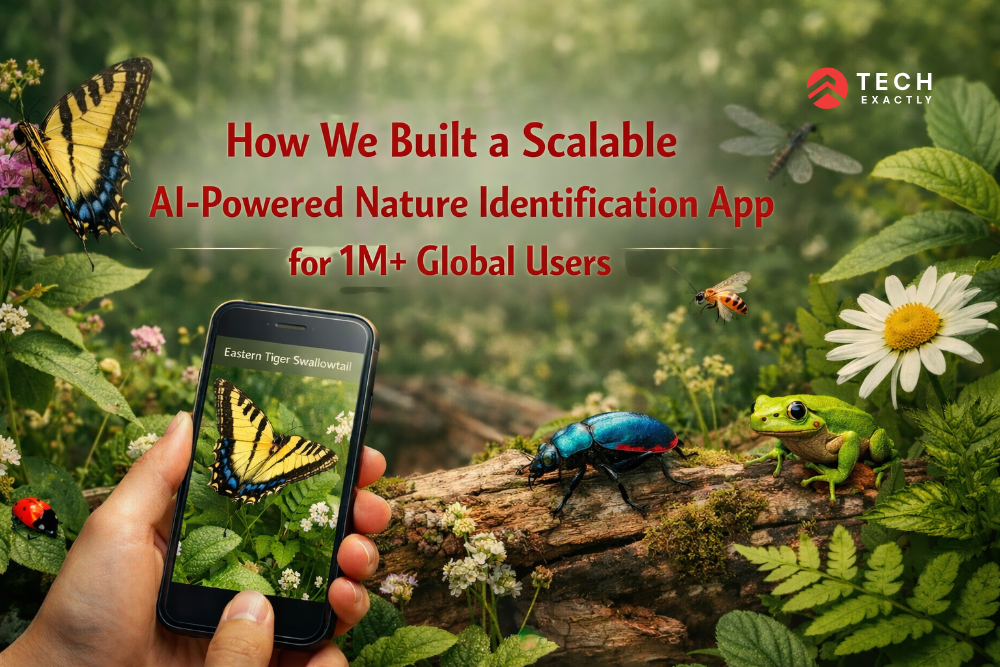
You’re hiking through the Pacific Northwest. The air smells like pine and wet soil. You crouch near a fallen log and spot something unusual, a tiny iridescent beetle, maybe half an inch long, going about its business. You have no idea what it is.
You pull out your phone. Open the app. Point the camera.
Two seconds later: Calosoma scrutator. Fiery Searcher Beetle. A natural predator of caterpillars. Beneficial to forest ecosystems.
Now imagine that moment multiplied by two million species, available to users across 50+ countries, backed by infrastructure that doesn’t flinch when a million people are doing exactly this at the same time on a Sunday morning.
That’s what we built at Tech Exactly. And the path from idea to reality was anything but simple.
A Nature Enthusiast’s Vision That Matched a $2.5B Market Opportunity
Our client was not a tech founder. He was a nature enthusiast. And he had one clear question:
Plant apps focused only on plants. Insect tools were limited or unreliable. Information existed, but it was scattered, inconsistent, and often assumed the user already knew what they were looking for.
Why is there not one app that can identify plants, insects, birds, and animals, and actually do it well?
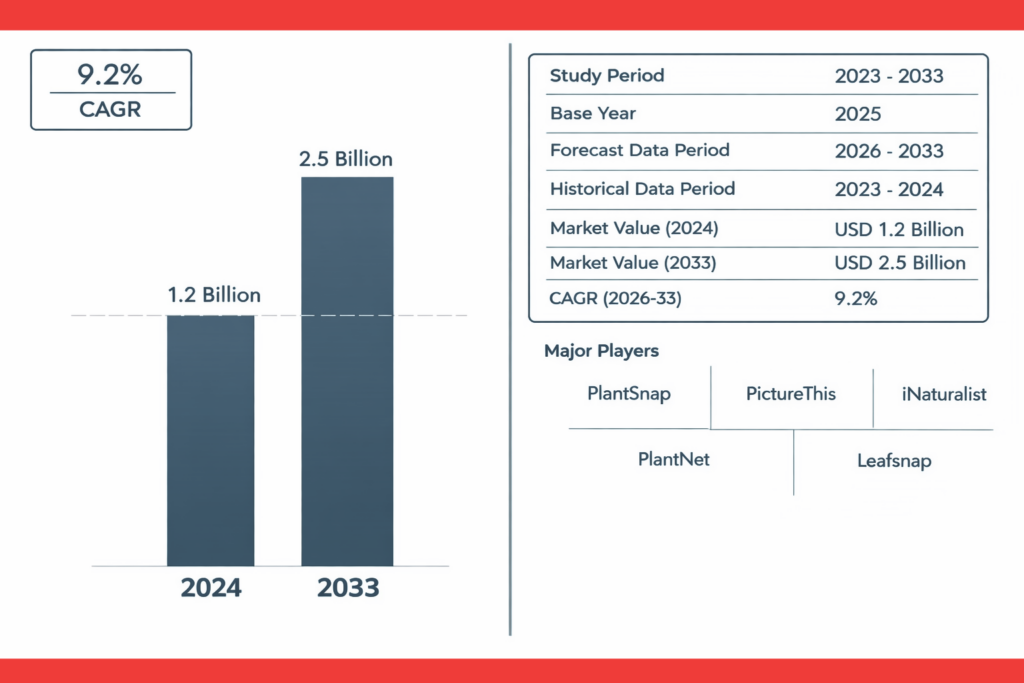
The market backed his instinct:
- AI in the wildlife monitoring market will become USD 2.5 billion by 2033
- Global searches for terms like best free insect identification app, bug identifier app free, and free insect identification app for Android have grown consistently year over year
- Over 1.5 billion nature and outdoor app downloads happen annually worldwide
The gap was real. The appetite was real. What he needed was a technical partner who could close it: at scale, across platforms.
That is where Tech Exactly came in to help translate the curiosity into something people could rely on, anywhere in the world.
The Challenges Involved in Developing the Mobile App
Before writing a single line of code, we had to solve some genuinely hard problems that could make or break the entire product.
How Do You Teach AI to Identify 2 Million Species Accurately?
Here’s the thing about building a reliable insect identifier online experience. You’re not just teaching a model what a butterfly looks like. You’re teaching it to distinguish between 20,000 beetle species that look nearly identical.
A Monarch butterfly and a Viceroy butterfly are so visually similar that even experienced naturalists pause. While working on an AI app development, we can’t afford to pause, and we definitely can’t afford to guess wrong.
Data accuracy was the entire value proposition. Get identifications wrong too often, and users don’t just leave the app; they lose trust in the whole concept.
Can Infrastructure Handle a Million People Identifying Species at Once?
Nature doesn’t operate on a schedule. When users across Japan, Brazil, and Germany are all photographing insects simultaneously on a rainy Sunday morning, the system has to keep up without slowing down.
53% of mobile users abandon an app that takes longer than 3 seconds to respond. For an identification app, a five-second wait doesn’t just annoy users; it breaks the moment entirely. The wonder is gone. They close the app and never come back.
Monetizing the Mobile App
The client needed revenue. But he also understood something most startups miss. The moment someone points their phone at an unknown plant and learns its name in two seconds, that’s the entire product. Gate that moment behind a paywall and you have destroyed the only thing worth selling.
Building a subscription model that generated real revenue while keeping the core experience free forever was a tightrope walk. If we lean too hard on monetization, the conversion rates would suffer. Pull back too much, and the business model collapses.
Privacy, Security, and Global Compliance
The app collects location data, user photos, species journals, and community interactions. That comes with serious obligations across 50+ countries with wildly different privacy regulations.
Secure data handling, encrypted transmissions, and GDPR compliance were foundational requirements that could expose the client to legal risk if not met correctly.
Our Approach Towards Building the Right Mobile App
Building an AI That Gets Smarter With Every Mistake
Our developers used AWS SageMaker to train our computer vision models, but the breakthrough was in the architecture itself. Instead of one massive model trying to handle 2 million species, we built a layered triage system:
- A broad classifier runs first (plant, insect, or bird?)
- It routes the image to a specialist sub-model for that category
- The specialist makes the precise species-level identification
Our mobile app architect, Manas, often describes it this way: “It is like a hospital emergency room. The triage nurse does not diagnose the patient. They direct them to the right specialist. That is exactly how our system works.”
This approach delivered three critical wins:
- Faster results
- Higher accuracy
- Scalable training
We also built continuous learning into the pipeline from day one. Every time a user corrected a wrong identification, that became a labeled data point fed back into the next model iteration.
Right Infrastructure to Handle Spike
No app launches with a million users. But the ones that survive viral growth are the ones that planned for it before it happened.
We deployed on AWS Cloud with auto-scaling groups, monitoring real-time traffic. When half a million people photograph insects after a rainstorm, the system spins up compute capacity automatically. When traffic drops overnight, it scales back down.
This work was made possible by the following key decisions:
- Auto-scaling based on real-time workload
- Globalising the application on AWS with each region having the performance and low response times (less than 2 seconds)
- Implementing caching strategies
Google Places API adding geo-context. The same visual snake in Florida isn’t equally matched with the same species visually matched in Thailand. By providing location data behind the scenes to improve the accuracy of identification, we can now show users a continuously updating biodiversity map where they can see what has been discovered close to them.
Result: Over 1 million users onboarded within months of launch, with zero outages, no performance issues, and no emergency scrambles to rebuild infrastructure under load.
A Freemium Model That Earned Conversions Naturally
We integrated Adapty for subscription management with one firm rule: the core experience stays free forever.
Here’s what that meant in practice:
- Always free: Point, shoot, identify any species instantly
- Premium features: Offline mode, detailed species histories, ad-free experience, advanced community tools
Users who experienced the free core and found genuine value converted naturally. Conversion rates after launch validated the approach completely.
Social sharing through Meta SDK turned users into a growth engine. Nature enthusiasts love sharing cool discoveries. When someone posts a rare moth identification to Instagram, it reaches hundreds of people organically.
Cross Development
The free insect identification app for Android is designed primarily for Asia, Africa & Latin America – these regions account for most of our end-users who use both Android devices & iOS devices when analyzing organisms.
If we had developed native (separate) apps for iOS & Android, we would have needed twice the time and twice as much money to maintain them. React-Native is a single code base that enables us to achieve near-native/similar performance on both platforms, have a consistent user experience across all devices, and release new versions of each application at the same time.
You might like reading the case study: Engineering An Intuitive Nature Identification Mobile Application For Two Million Plus Biodiversity Enthusiasts.
The Impact We Saw After Launch
When the app launched, the numbers told a clear story:
- 2 million+ species identified in real-time in just 2-second response times
- 1 million+ users onboarded globally within months
- High subscription conversion rates prove the freemium model worked
Beyond metrics, something harder to quantify happened. A kid in rural Kenya identifying a beetle for the first time. A retiree in Ohio discovers the bird outside her window is a species she never noticed in 40 years. A hiker in Patagonia documenting a locally rare plant.
Final Thoughts
The principles behind this extend far beyond nature identification.
The same foundations apply to other industries, too. This is where thoughtful mobile app architecture, scalable AI systems, and product-led engineering make the difference.
At Tech Exactly, an AI app development company in USA, we partner with teams to turn ambitious ideas into production-ready mobile applications. From AI-powered platforms to healthcare or fintech apps, we focus on building systems that hold up under real usage, real growth, and real expectations.
If you are exploring an idea that demands this level of technical depth or looking to hire ai app developer, we would be happy to have a conversation. Say us a hi 👋 at [email protected]