

US & UK Healthcare App Compliance: HIPAA, GDPR, FDA & UKCA

One data breach in a healthcare app can cost millions, and more importantly, patient trust that may never be regained. With the rise of telemedicine apps and AI-based apps, healthcare apps are dealing with the most sensitive information of patients every second of the day.
But with every great innovation comes the need for great responsibility. If you are planning to develop healthcare apps for countries like the USA and the UK, then you must understand that compliance is the foundation of the healthcare app.
For any startup, this can be a daunting task. This is where a Healthcare App Development Company in the USA can make all the difference for you. This guide will walk you through the essential compliance standards that every healthcare app needs to follow.
What are Compliance Standards in Healthcare?
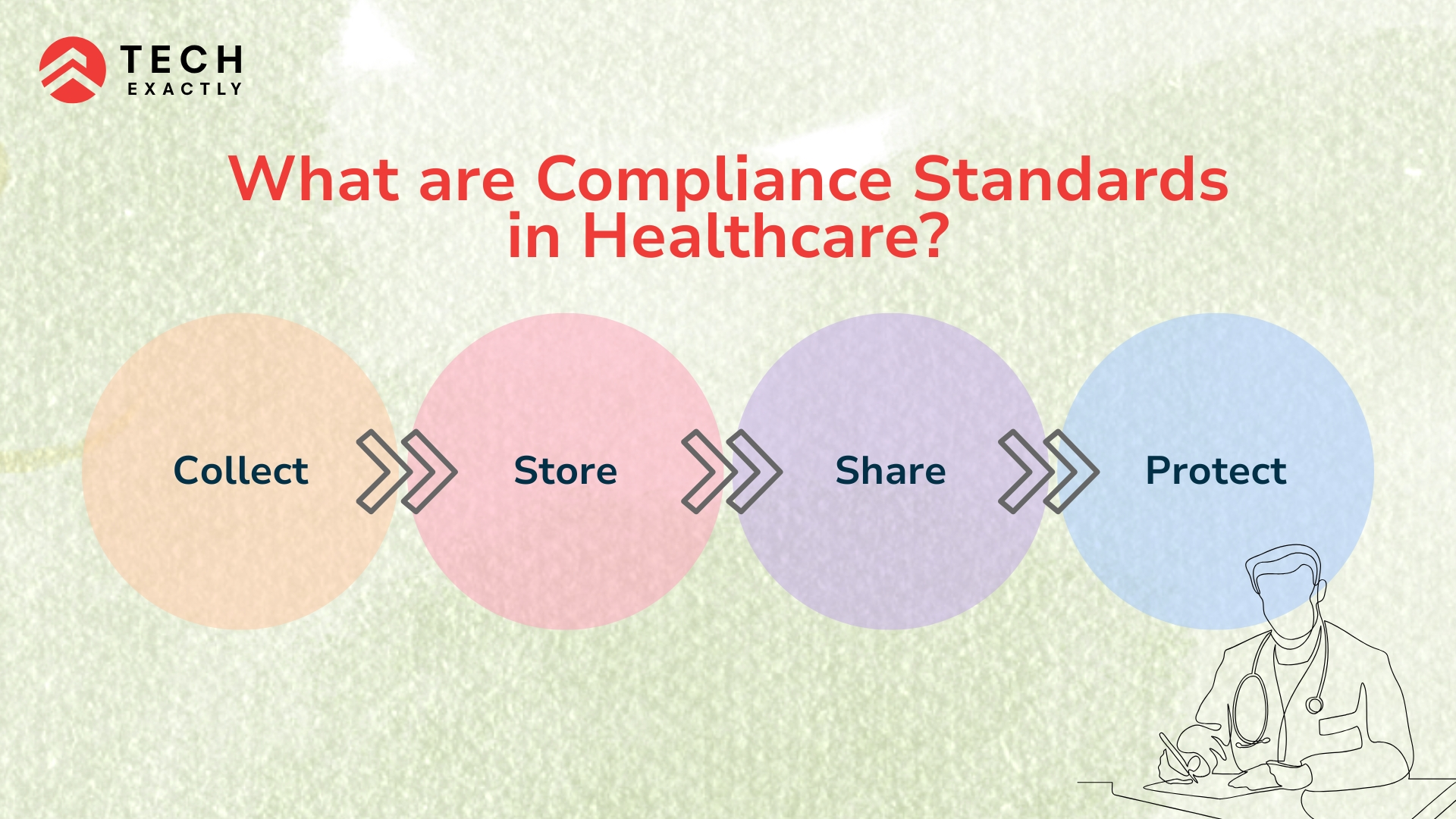
The compliance standards in healthcare are the set of laws and regulations that are intended to guarantee the safe, ethical, and transparent handling of patient data.
The standards cover the following aspects of healthcare applications:
- Collection of patient data
- Safe storage of sensitive data
- Sharing of data between different systems
- Prevention of data breaches and misuse
You can refer to the official HIPAA privacy guidelines by HHS and the UK data protection guidelines by the ICO for a deeper understanding. In other words, the primary focus of compliance is to protect the trust of the patients.
In the context of Healthcare mobile app development services, Tech Exactly explains that compliance is not an afterthought; it is integral to the entire architecture of the app.
Why Following Compliance Standards is Important in Healthcare?
Ignoring compliance is not just risky, it’s expensive.
Here’s why compliance matters:
Protects Patient Data
Healthcare apps deal with personal health information (PHI), which is among the most sensitive data categories. Compliance ensures this data remains secure.
Avoids Legal Penalties
Violations of these regulations, like HIPAA and GDPR, can result in huge fines. In 2023, a healthcare provider was hit with a $2M HIPAA fine related to improper data access controls. Non-compliance with these regulations can cost startups millions of dollars.
Builds Trust
Users are more likely to use an application if the application has a good healthcare compliance certification.
Enables Market Entry
One cannot operate in places such as the US or UK without adhering to their compliance requirements.
Supports Scalable Growth
Compliance-ready systems are also simpler to scale, integrate, and expand. For startups looking to enter the American healthtech landscape, compliance is not an obstacle, but an opportunity.
Core Compliance Standards in the USA & UK
Let’s break down the most important regulatory frameworks you need to know:
HIPAA for USA (Health Insurance Portability and Accountability Act)
HIPAA is the foundation of healthcare compliance in the United States. It dictates the way in which Protected Health Information (PHI) is:
- Stored
- Transmitted
- Accessed
Key requirements:
- Data Encryption – both at rest and in transit
- Access controls and user authentication
- Audit trails of data usage
- Business Associate Agreements (BAAs)
If your app deals with patient data in the United States, then HIPAA compliance is not optional; it is mandatory. Learn more through the HIPAA Privacy Rule overview and HIPAA Security Rule requirements.
GDPR for UK/EU (General Data Protection Regulation)
GDPR is applicable to health apps in the UK and EU. It primarily deals with user privacy and their rights to their data.
The main principles of GDPR are:
- User consent
- Right to access and erase
- Data portability
- Privacy by design
GDPR is one of the most rigorous data privacy regulations in the world. Non-compliance can result in a fine of up to €20 million or 4% of global revenue. Explore the complete guide to GDPR compliance and UK GDPR compliance guidance.
HITECH Act for the USA
The HITECH Act is an extension and improvement of HIPAA, and it encourages the use of electronic health records.
It includes:
- Breach notification requirements
- Increased penalties for non-compliance
- Greater accountability for third-party vendors
As a startup, you and your entire ecosystem have to be compliant.
Data Protection Act 2018 for the UK
The UK’s Data Protection Act is a supplement to the GDPR, which outlines how personal data should be processed within the UK.
It focuses on:
- Lawful processing of the data
- Rights of the data subject
- Effective enforcement of the regulations
Refer to the official UK Data Protection Act 2018 legislation. Any Healthcare App Development Company in the UK must align its solutions with the GDPR and the above act.
MHRA / UKCA Mark for UK
If your application is considered to be a medical device, then it is necessary for your application to comply with MHRA regulations and achieve UKCA marking status.
This includes applications that:
- Make diagnoses
- Offer treatment recommendations
- Monitor patients’ health
Without a UKCA marking status, your application cannot lawfully operate as a medical device.
FDA Regulations for the USA
In the US, the FDA regulates healthcare apps used as medical devices. Healthcare apps that the FDA regulates include:
- Apps used for clinical diagnosis
- Apps used for the control of medical devices
- Apps used for the delivery of treatment information
Check the FDA digital health regulations and the FDA guidelines for mobile medical apps.
Essential Data Protection and Security Controls
Beyond regulations, your app must implement strong technical safeguards.
Encryption
It helps ensure that data cannot be read by unauthorized users. Best Practices can be followed are:
- AES-256 Encryption should be used for data at rest.
- TLS protocols should be used for data in transit.
Authentication & Access Control
Not all people should have access to all things. Implement these for authentication:
- Multi-factor authentication (MFA)
- Role-Based Access Control (RBAC)
- Secure Session Management
Audit Logging
Each action in the system should be tracked. Audit logs are used for:
- Detection of suspicious behavior
- Accountability
- Compliance auditing
Breach Notification
Regulations require reporting in case of a breach. For example:
- HIPAA: report within 60 days
- GDPR: report within 72 hours
Having a response plan is critical.
Data Minimization
Collect only what you need. This would play a significant role in minimizing:
- Risk exposure
- Storage costs
- Compliance complexity
Quick Compliance Checklist for Startups
Before planning the launch of your healthcare app in the US or UK, ensure you have the following in place:
- Is your data at rest encrypted using AES-256, and is TLS used for data in transit?
- Do you have multi-factor authentication (MFA) implemented?
- Do you have role-based access control (RBAC) implemented?
- Are audit logs enabled and monitored regularly?
- Do you have a breach notification policy in place?
- Are you only collecting the minimum required user information?
- Are your third-party vendors compliant with HIPAA/GDPR?
However, if your answer is ‘no’ to any of the above statements, then your app is not yet ready for compliance.
Additional Regulatory Requirements
Beyond core laws, there are additional standards that enhance security and credibility.
PCI DSS
In case your healthcare app handles payments, then PCI DSS compliance is necessary. It helps protect the following data:
- Credit card data
- Payment transactions
ISO 27001
ISO 27001 is the world standard for information security management. This can helps organizations by:
- Identifying risks
- Implementing controls
- Improving continually
Refer to the ISO 27001 information security standard.
NHS Digital Technology Assessment Criteria (DTAC)
For apps seeking to enter the UK’s healthcare system, DTAC is crucial.
DTAC checks for:
- Clinical safety
- Data protection
- Technical security
- Interoperability
Compliance with the DTAC will improve your chances of being used within the NHS.
Final Thoughts
Creating a healthcare app nowadays isn’t just about innovation; it’s about responsibility. Compliance is the base on which your creation stands, becoming safe, viable, and trusted by its end users.
For a startup, trying to navigate this intricate system alone can be a costly mistake. This is where seeking expert advice from people who understand both technology and compliance becomes essential.
If you’re targeting a US or UK market, getting this right early can save months of rework. That’s where experienced healthcare development partners like Tech Exactly can help.
They help create compliant, viable, and market-ready healthcare apps for the global market. Whether you need end-to-end creation services or compliance consultation, our experts ensure your creation meets all compliance requirements right out of the box.